A Reflection from “Padre Pio and You” by Mary O’Regan
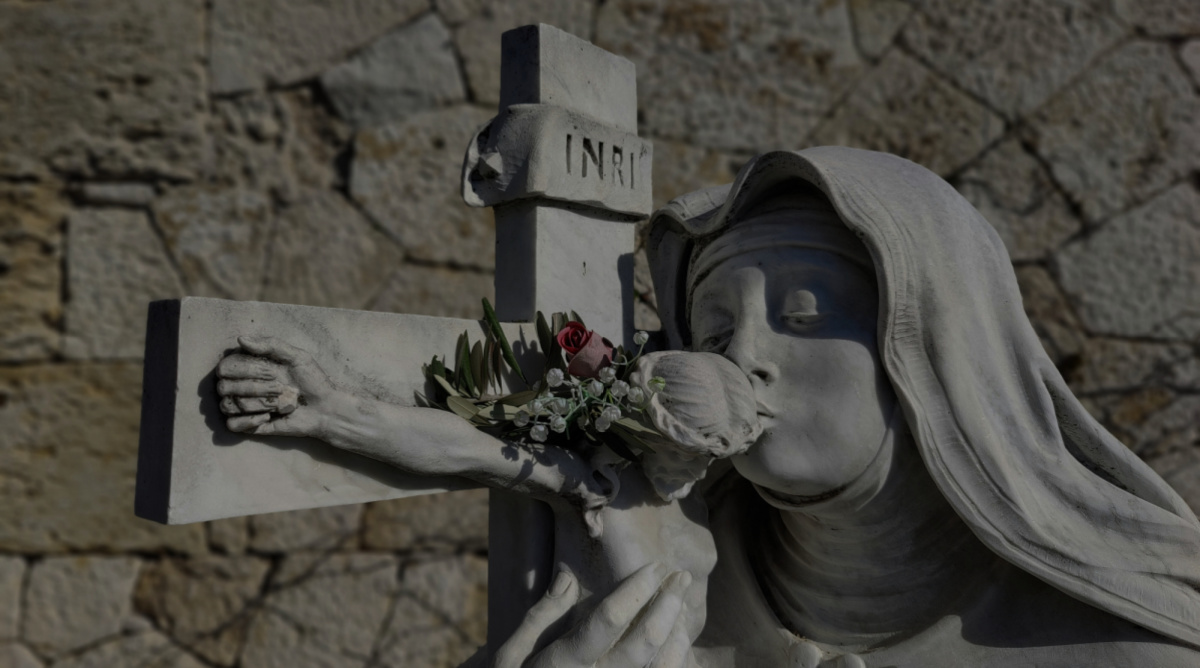
During the fifty-eight years he was a priest, Pio was simultaneously a stigmatist. He received the stigmata in September 1910, and he died in September 1968. He was a crucified priest, living a living crucifixion. For the first eight years of priesthood, Pio had invisible stigmata. Then, for the remaining fifty years of his life, he bore the wounds visibly and they could be seen in all their bloodiness by human eyes. Pio’s priesthood and the stigmata were inseparable. In those years when Pio was in his twenties, however, the invisible wounds did not attract notoriety. A few months after he first received the wounds, Pio knew for whom he felt called to offer his pain. He sought Padre Benedetto’s permission to offer it for two sets of souls: “My dear Father, I want to ask your permission for something. For some time I have felt the need to offer myself to the Lord as a victim for poor sinners and for the souls in Purgatory.”
Benedetto replied energetically, “Make the offering.” He further encouraged Pio, “Extend your own arms also on your cross and by offering to the Father the sacrifice of yourself in union with our most loving Savior, suffer, groan and pray for the wicked ones of the earth and for the poor souls in the next life who are so deserving of our compassion.” This letter, written over a hundred years ago, did not just apply to the people living at that time, but to all the people who would ever live who would benefit from Pio’s sacrifice. We could be among the people for whom Padre Pio offered up his agony. It may take the gift of humility to accept this, but we are part of the group of “poor sinners” whose debt would be diminished by Pio.
Throughout all this, Pietrelcina remained the only place where Pio was well enough to function. He even had the strength to fend off a suggestion that triggered him. His old buddy Mercurio was rather red-blooded, and even though he knew Pio bore the holy wounds of Christ, he had the audacity to say to Pio that his illness was caused by sexual frustration and that he ought to get married. Pio grabbed a pitchfork and swung it at Mercurio as he chased him away.
We may well ask what was so special about Pietrelcina; why was Pio only well there? Pio was given the grace to be there because he was so dearly loved by his native people that they prayed their hearts out that he could stay in their company—and the Lord answered them. In fact, Pio said, “The Lord intends to hear the prayers of all these devout people here who want, it would appear, to keep me against my will in their midst, by sending up prayers and almost doing violence to the Heart of God to obtain their great desire.”
The powerful prayers of the people of Pietrelcina kept him with them, and to think, they didn’t even know they had the Second St. Francis as their neighbor! But Pio showed great charity to all. He rose to the challenge of being a school-teacher and taught math. His pupils knew him to be exceptionally patient, especially with those who struggled. One former pupil shared the memory that Pio worked tirelessly with him until he could solve math problems. If, however, Pio heard a boy cursing or blaspheming, he would take off his sandal and swat him with it. Among the adult population the level of illiteracy was high, so Pio arranged for adult education alfresco. He held lessons in reading and writing in the open fields for farmers and laborers. Pio would have done none of these works of charity among his own kin had he been well enough to live in a monastery. But the symptoms that could not be treated by the best doctors were not owing to weakness in Pio’s physical makeup; rather, Pio revealed that the cause of his illness was “entirely spiritual pain.” Certainly, Pio was suffering intense demonic persecution, and Satan was trying to oppress Pio in mind, body, and soul.
+

This article on the St. Pio’s stigmata is adapted from the book Padre Pio and You by Mary O’Regan which is available from Sophia Institute Press.
Art for this post on a reflection from Padre Pio and You: cover used with permission; Photo used in accordance with Fair Use practices.