Editor’s note: This is part 2 of a series. Read part 1 here.
If it is, then, in the solitude of the heart where one encounters God most deeply, it will be necessary for us to clarify what we mean by the word heart. For many, especially in Western culture, the heart is associated with emotions, feelings, and even thoughts. Hence, the word heart generally carries with it a feeling of sentimentality. Although this is indeed an aspect of the heart, it is not the heart in its fullness that the saints speak of when referring to prayer, nor is it the biblical understanding of the heart. For the saints and the Bible, the heart is something much more. The Catechism of the Catholic Church defines the heart in this way: “The heart is the dwelling place where I am, where I live… it is our hidden center, beyond the grasp of our reason and of others; only the Spirit of God can fathom the human heart and know it fully.”[1]
The heart is that place where each person stands before God in truth, as they really are. In the depths of the human heart, one cannot hide behind things like resumes, social status, physical features, and all the exterior things that the world often considers important and regularly hides behind. Hence, when we talk about the heart, we are talking about the real you or your deepest and truest self.
However, this true self that is found in the solitude of one’s heart is very often not the self that we project onto the world, or the self that we want others to believe we are. Nor is it the self that very often we or others believe we should be. Rather, it is the self that is made in the image and likeness of God (Genesis 1:26).
As silly as it might sound, we must ask ourselves this question: Does anyone know who this true self is? In other words, does anyone know who they really are? When most people are asked, “Who are you?” many will respond by saying what they do for a living, or what their ethnicity is or how many degrees or children they have. Unfortunately, many of us are so identified with our status and roles in this world that we believe that those things are who we really are. As a result, many people live their entire lives without every knowing who they really are, and therefore never really knowing who God is either. The truth about ourselves and God can only be known and experienced when we stand alone before God and enter this solitude of the heart. For it is here in this sacred place, where we are forced to come out of hiding and say to God, “Here I am” (Isaiah 6:8).
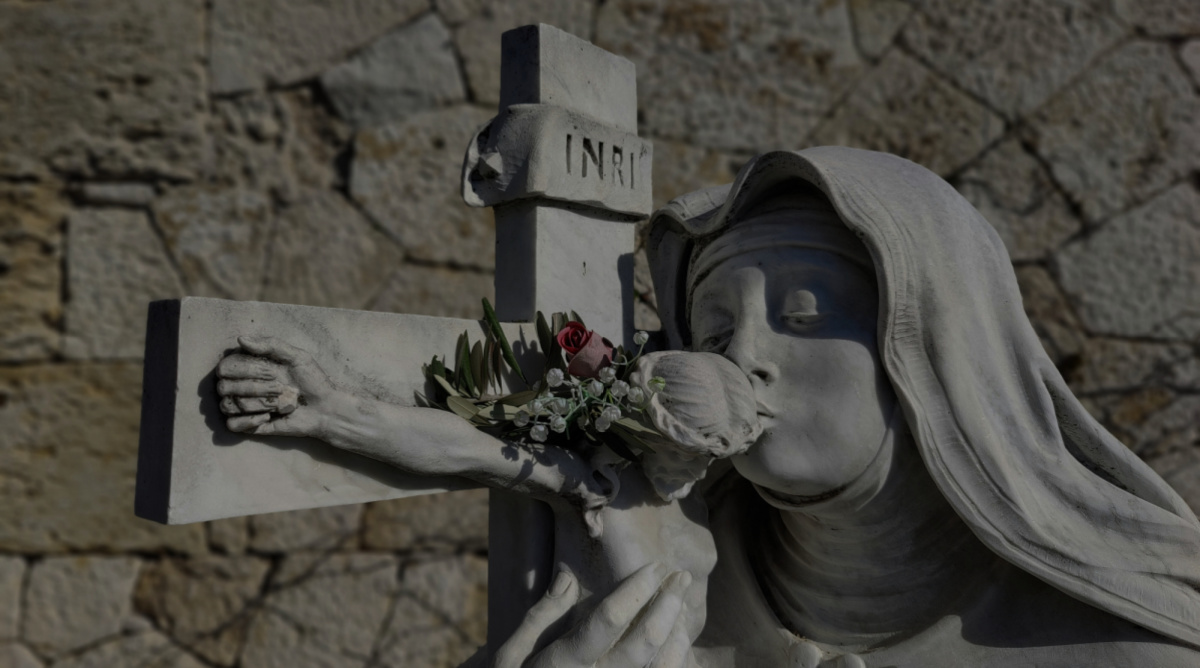
This may sound attractive, but we must first be aware of what this journey into the solitude of the heart entails. In short, the way into the heart is a path of martyrdom. The Eastern Church teaches that a person who enters their own heart is essentially a martyr. In the Philokalia, the word heart is defined as the “spiritual center of man’s being, man as made in the image of God, his deepest and truest self, or the inner shrine.” It concludes by saying that one can only enter the heart “through sacrifice and death.”[2]
Entering one’s heart leads to martyrdom.
Entering one’s heart leads to martyrdom.
For most people (including myself, at first), describing entering one’s heart as a path of martyrdom may appear strange or even disturbing. Why must entering one’s heart involve sacrifice and death–and to what must I die? Let us begin by answering the latter question. Essentially, we must die to everything in us that is not godly. We must die to every thought, desire, hope, or attachment that does not have God as its proper motive and end. This means that we must also die to every form of vanity, pride, and self-centeredness that is within us.
We must also die to every illusion or lie about ourselves, others, and God that we allow ourselves to entertain or even believe. In short, we must die to everything emotionally, psychologically, physically, and spiritually that is not of God. The reason then that the journey into the solitude of the heart involves sacrifice and death is because there is simply so much in us that is not of God.
St. Francis once said that “What a person is before God, that he is and no more” (St. Francis).[3] The person St. Francis is referring to is one’s true self that can only be found in the solitude of one’s heart. Do you and I want to know that person? If we do, it will involve sacrifice and death, but more importantly, it will lead to resurrection.
[1] Catechism of the Catholic Church, #2563.
[2] The Philokalia, Volume 1, Faber and Faber, Inc. 1979, 361.
[3] Day by Day with St. Francis, Gianluigi Pasquale, New City Press, 2011, 47.
________________________________________________________
Image: Unsplash