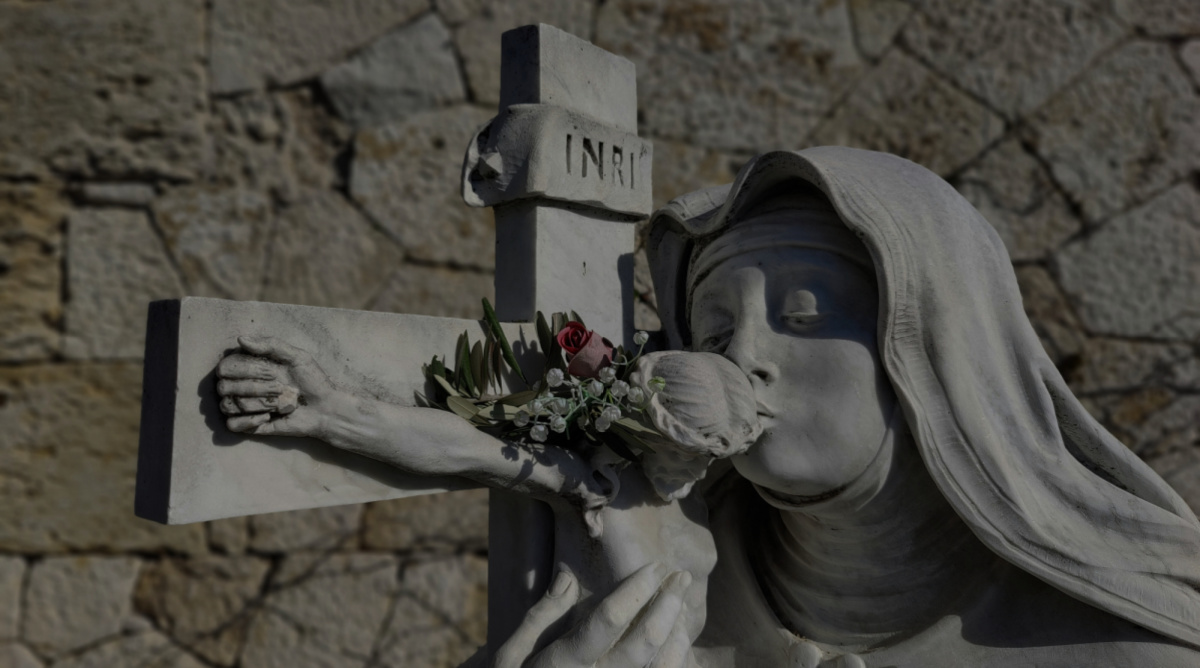
“John of the Cross’ theology begins with a wound” (Peter Tyler, St John of the Cross [2010], 41). It begins with the terrible cry of love’s anguish, “Where have you hidden, Beloved, and left me moaning (and wounded)?” (Spiritual Canticle 1). And with this, there is the summons to “go out” of ourselves: “I went out, calling you…” (SC 1). “Having encountered the hiddenness of God, in the divine wound or discontent, our response is to ‘go out’” (Tyler, 43). “Seeking my Love…I will go beyond” (SC 3) “I went out unseen” (Dark Night 1).
“This is a holy wound that lies at the heart of all human life” (Tyler, 41). From this place, John builds an existential theology of Christian life based on our share in the dying and rising of Jesus, in the emptying and filling, in the nada y todo. “John’s is not a theology built on abstract theories of divinity but rather the ordinary flesh and blood lives of mortals,” yet mortals seized by Jesus, the God-man (40). And in this yearning (eros) and wound of love, in this holy discontent, we meet the “inflow of God.” The dark night of contemplation is a “secret, peaceful, and loving inflow of God” (Dark Night I, ch 10.6).
The crying out from the wound of love meets the inflow of God into the poor and emptied soul longing for More. We start with the fragility of the wound of love to receive the divine influx of God’s superabundance in trial and in repose, “the dominating fullness of God’s pure and simple light” (Ascent of Mount Carmel I, ch 4.1). This occurs precisely at the Cross, with Jesus, in the Cross’ twofold empty fragility and self-transcendence. Through the pining love-anguish and openness of the wound, there is a crying out and receiving More. We go out of ourselves and enter more deeply into God, precisely through the anguished and open wounded Heart of Jesus.
Jesus’ thirsting, wounded love goes before ours, even from the beginning. “Where have you hidden?” remains the first anguished cry of God to man (Gen 3:9).
____________________________________________
* Peter Tyler. St John of the Cross. London: Continuum, 2010
Image: Unsplash