A Reflection from “Humility of the Saints” by Patrick O’Hearn
All worldly honor is the business of the devil. —St. Hilary
Throughout the Gospels, Jesus denounces the scribes and Pharisees: “They love the place of honor at feasts and the best seats in the synagogues, and salutations in the market places, and being called rabbi by men” (Matt. 23:6–7). The scribes and Pharisees sought the places of honor for themselves, rather than giving all honor to God. Honor comes from the Latin honorem, meaning “honor, dignity, office, reputation.” It involves merited respect or recognition, which is why we are called to honor our father and mother, as the fourth commandment teaches. We also pay honor to those in high office, or to those who have achieved advanced degrees.
The saints recognized that worldly honors, even titles within the Catholic Church, can be deadly to humility when we seek them for themselves and cling to them. St. Jane Frances de Chantal once said, “I would sooner see my monastery buried in the sea, than ambition or the desire of office enter it.” Prideful people seek honor as their greatest treasure, whereas the godly seek to redirect all honor where it rightly belongs: to God alone.
Honors do not satisfy the human heart; in fact, they can often be the very cause of our perdition, as St. Alphonsus declared: “Worldly honors are the means by which Satan gains many souls for hell.” Furthermore, Servant of God Rafael Merry del Val wrote, “Honors produce within us the effect of inebriating our mind and rendering us stupid with pride.” Yes, pride makes us stupid. It can lead us to waste our lives trying to achieve some earthly fame, striving to be remembered by all, when the sobering reality is that most people will forget us soon after we die, and all our trophies and plaques will gather dust. Truly, the greatest honor is to be considered a fool for Christ, as St. Paul wrote: “We are fools for Christ’s sake, but you are wise in Christ. We are weak, but you are strong. You are held in honor, but we in disrepute” (1 Cor. 4:10).
The saints did not care whether they were humiliated by others. And although many great saints held high offices in the Church, they knew that their holiness had nothing to do with making a name for themselves. St. Mary Magdalene de Pazzi used to say that “the honor of a nun consists in being the lowest of all, and in having a horror of being preferred to any.” There is a saying that “he who enters the conclave wanting to be pope will leave a cardinal. He who enters not caring who is elected may leave as pope.” The saints did not desire to be honored like the rest of the world. No, they desired to be shamed like Christ. They avoided all positions of honor and sought out the most menial work.
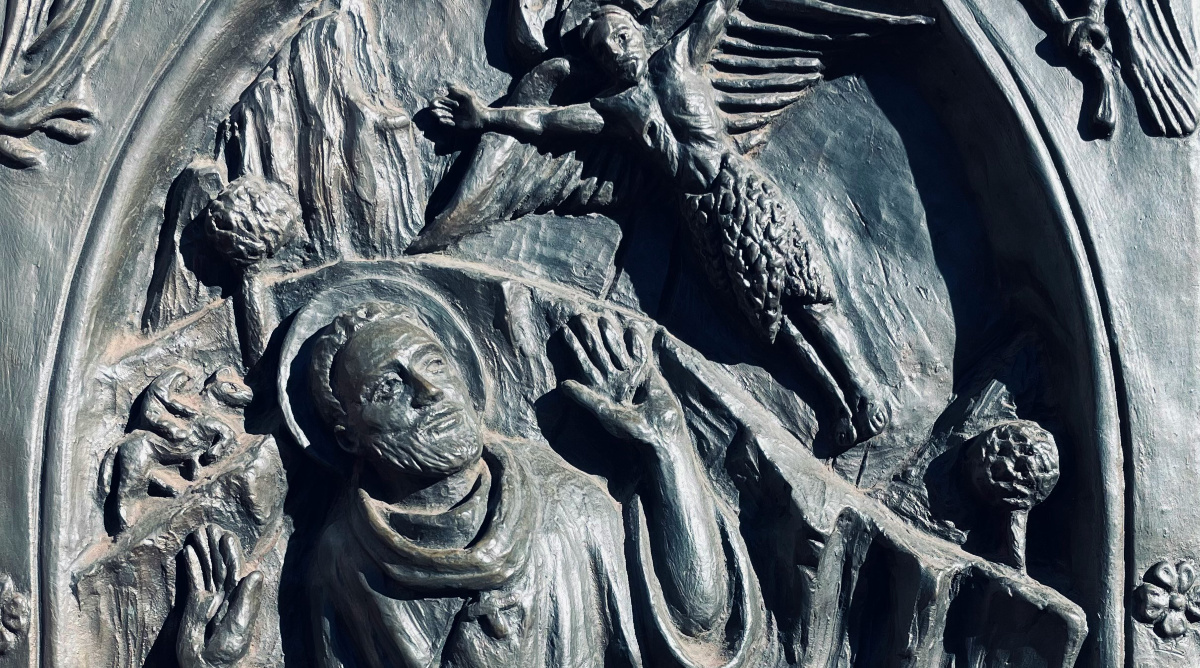
St. Ignatius of Loyola (1491–1556)
In 1491, one of the Church’s greatest saints came into the world in Azpeitia, Spain. The youngest of thirteen children, St. Ignatius of Loyola lived for the world and the honor of man until his profound conversion at the age of twenty-nine while recovering from a cannonball injury he sustained at the Battle of Pamplona. In the words of F.A. Forbes, “He was above and beyond all [else] a man of war. His dearest aspiration was to win honor and glory as a soldier—to make for himself a name which should live in the history of his country.”
Prior to his injury, Ignatius was infected with pride and the allure of the world. He began his career serving as a page for a relative. While rising through the ranks, he engaged in worldly pursuits, chasing after women and indulging in the passing pleasures of gambling, fencing, and dueling. He continued to advance in his career because of his leadership skills, both in war and in the duke’s court, where he earned the title “servant of the court.” But one battle injury would shatter his leg and his worldly dreams. The Divine Physician permitted this wound to remove the cancer of pride—the desire for honor and human glory—and replace it with the zeal for God’s glory and honor.
In his father’s castle, with only books on the life of Christ and the saints available to entertain him, Ignatius began to hear the call of God for the first time. Inspired by these holy men and women, he wanted to live for something far greater than himself. At the same time, his mind lingered on the court and his former life, which left him desolate, whereas the saints filled him with peace and joy. During his long recovery, Ignatius experienced discernment firsthand.
God led Ignatius on a journey of humility, moving him to renounce his noble title, worldly passions, and wealth, and to found the Society of Jesus (now known as the Jesuits) with Sts. Francis Xavier and Peter Faber in 1534. The Jesuits’ motto, attributed to St. Ignatius, became Ad Majorem Dei Gloriam (“For the Greater Glory of God”). After spending his life chasing worldly glory and honors, Ignatius now lived entirely for the glory of God.
A saint who lives entirely for God’s glory is indifferent to his own honor or dishonor. Honors, whether achieved by one’s efforts or heaped upon him by others, add nothing to a person’s greatness. Ignatius knew this more than anyone. When he returned to his native Spain after studying in Paris, he showed how much he distrusted and even disliked receiving honor for himself:
His family and the townspeople also had done everything to prepare an extraordinary reception for him. They had sent out scouts along all the roads to give notice of his arrival, one of whom discovered him at an inn, and looking through a crevice of the door of his room, saw him absorbed in prayer. On receiving this news the Clergy of the town and the members of his family came in procession to meet him. They had at first designed to give him a pompous reception, but they afterwards changed their mind, thinking that this worldly grandeur would displease him. The honour which they showed him in coming to meet him in procession gave him more pain than it would have given of pleasure to most men. He most positively refused the invitation to the paternal mansion made him by his relatives, and went direct to the Hospital of St. Mary Magdalene, where they sent him a comfortable bed and refection, but he made no use of the one and distributed the other to the sick. To prevent his sleeping any longer on the floor they were obliged to change the good bed they had sent him for a poor and ordinary one, and then he consented to make use of it.
St. Ignatius of Loyola, a true man of humility, fled from any honor directed toward him. He wanted only to be conformed to Christ in everything.
When the time came for the Jesuits to elect their first superior general, Ignatius was the top choice, especially since he was one of the most virtuous members due to his profound love for prayer. Yet he refused to vote and would accept whomever was elected, granted it was not himself. Only a humble soul like Ignatius would refuse to lobby for himself, even though he was the most qualified candidate. Not surprisingly, Ignatius was elected, and he was the only one to oppose his own election. He cited “his defects and his incapacity.” After much prayer, and at the command of his confessor, Ignatius finally accepted the position. It is a true testament to his humility that Ignatius consulted his confessor about this, trusting not in his own insights but allowing another priest to guide him to the will of God. Although we should never seek honors for ourselves, we must also be careful not to reject God’s call out of a false humility. While Ignatius preferred to be in the background, he prudently and humbly knew that God had equipped him with the talents and virtue to lead the Society of Jesus. It was not his order but God’s. He truly sought God’s glory and wanted to remove any level of human interest in the order he helped found. Even as the superior, Ignatius did not let the honor of his position go to his head. Instead, he performed even the most humble tasks, working in the kitchen and teaching the catechism to children and adults.
Ignatius’s most famous writings are his Spiritual Exercises, which he began writing during a period of intense conversion at Manresa. Humility is a main theme that stands out in this work, according to one of his biographers:
In the book of the Spiritual Exercises, Ignatius has written a meditation on three degrees of humility. The third and the highest of the degrees teaches the companion of Jesus to choose with Jesus what is mean and contemptible in the eyes of the world, and to fly from seeking or desiring for their own sake the dignities and honours of this life. Amongst the members of the Society the most perfect equality reigns in all that concerns the manner of life, and no one can claim any distinction. They may gain academical honours and dignities, but these give them no exterior mark of distinction, and it is not even permitted to call them by their titles. No sign or title of rank can be accepted without the permission of the General.
Like all the saints, Ignatius sought to emulate Christ more in His Passion than in His glory, for to be with Christ in this life is to seek the Cross and to flee from honor. After spending his early life seeking honor, St. Ignatius knew the only honor worth having was to be viewed with contempt by the world. In fact, he even made a vow to accept “neither honors nor dignity.”
+

This article on St. Therese in exorcism is adapted from the book Humility of the Saints by Patrick O’Hearn which is available from Sophia Institute Press.
Art for this post on a reflection from Humility of the Saints: cover used with permission; Photo used in accordance with Fair Use practices.