A Reflection from “Wisdom from the Cross” by Casey Chalk
The Self Gift of Jesus
Jesus had no material wealth during His earthly life. The few possessions He had with Him when He was sentenced to death were divided among indifferent Roman soldiers. Yet our Savior’s Second Last Word demonstrated that He was much more focused on the spiritual welfare of the criminals crucified alongside Him than His few meager belongings. We read in Luke’s Gospel:
One of the criminals who were hanged railed at him, saying, “Are you not the Christ? Save yourself and us!” But the other rebuked him, saying, “Do you not fear God, since you are under the same sentence of condemnation? And we indeed justly; for we are receiving the due reward of our deeds; but this man has done nothing wrong.” And he said, “Jesus, remember me when you come in your kingly power.” And he said to him, “Truly, I say to you, today you will be with me in Paradise.” (23:39–43)
In one respect, Jesus’ words to the repentant criminal—whose name, according to tradition, was St. Dismas—were an extension of His First Last Word. The penitent man was forgiven of his sins, no matter how heinous. But Jesus’ promise of paradise went far beyond mere forgiveness, orienting Dismas and all present to a transcendent reality imperceptible to the senses.
In one sense, Dismas already perceived something of the paradigm of repentance and mercy. St. Robert Bellarmine observes:
Who has instructed the thief in mysteries so profound? He calls that man Lord whom he perceives to be naked, wounded, in grief, insulted, despised, and hanging on a Cross beside him: he says that after His death He will come into His kingdom. From which we may learn that the thief did not picture to himself the kingdom of Christ to be a temporal one, as the Jews imagined it to be, but that after His death He would be a King forever in heaven.
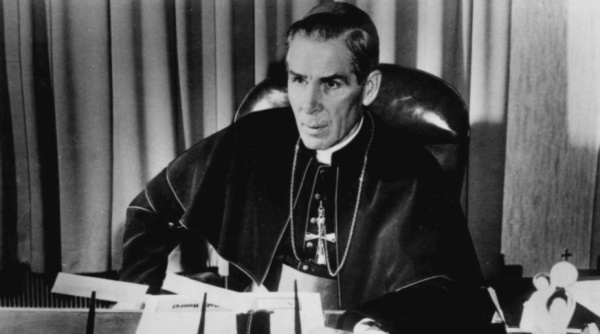
Remarkably, Dismas did not beg Jesus to save him from his immediate temporal predicament. He was concerned with eternity, and he believed that Jesus was actually capable of helping him. “He sees a Cross and adores a Throne; he sees a condemned man, and invokes a King,” writes Fulton Sheen. The religious authorities scoffed at Christ, but this criminal praised Him as royalty. It must have taken great faith to perceive God in that broken and abused man.
Dismas recognized that Christ’s kingdom transcends earthly power. For the reign of an earthly king lasts only during his lifetime, but the thief asked the dying Christ to remember him in His kingdom, implying that Jesus’ kingship would continue after His death. Dismas, likely an uneducated peasant, understood far more about Christ than did the educated elite of the Jewish religious establishment.
In a brief moment, Dismas’s death was transformed from ignominy to glory. He had been justly condemned for his crimes; now his cross, like that of Christ, could be his victory. “How suddenly is an enemy transformed into a supporter, a stranger changed into a friend, and a thief into a herald of truth!” writes St. Bonaventure.
Jesus held true royal power, yet He demonstrated unparalleled magnanimity and liberality. He promised the thief beatitude, the vision of God, a spiritual and heavenly paradise. As St. Ambrose notes, Our Lord always grants more than we ask. The thief asked only that Jesus remember him; Jesus promised him Heaven itself.
Moreover, this promised paradise was a personal one: Dismas would be with Jesus, the man he recognized as king. It is one thing for someone in a position of royal power to generously grant the wish of one of his subjects. It’s another thing entirely for that monarch to welcome that subject to permanent fellowship with Him!
All God required of the thief was a brief, sincere recognition of his sin and need for the Savior. A few words, and all was forgiven. “What person is there who should despair, if this thief dares to hope?” asks Bonaventure. The gates of Heaven were thrust open. This is unprecedented in salvation history. No one—not Moses, St. John, Mary Magdalene, or even our Blessed Mother—was the object of such a promise. And whatever Jesus says, because He is God, we can have perfect confidence that He will do. The reward was not deferred to some distant day but was granted at that moment, to be enjoyed upon Dismas’s imminent passing from this life.
+
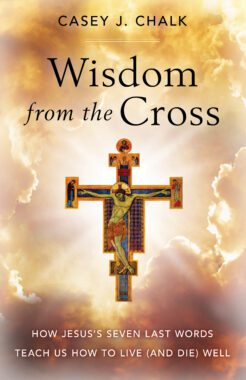
This article on forgiving is adapted from the book Wisdom from the Cross by Casey Chalk which is available from Sophia Institute Press.
Art for this post on a reflection from Wisdom from the Cross: cover used with permission; Photo used in accordance with Fair Use practices.