Humanity abides by seasons. Throughout life, we move seamlessly from one season to the next: from infancy to childhood, adolescence to adulthood, middle age to our elder years. Likewise, we live within nature’s own seasonal rhythm—winter, spring, summer, and autumn—each shaping how we eat, celebrate, dress, and even how we decorate our homes.
Yet for Catholics, there is another rhythm deeper still: the liturgical seasons of the Church.
These holy seasons offer inspiration as we move through the winters and springs, summers and falls of life. They provide wisdom and comfort during life’s most difficult realities: spiritual dryness, waiting, longing, disappointment, sorrow, weariness, and illness. They also teach us how to properly rejoice in moments of victory, consolation, joy, and answered prayer.
And when we learn to pray with the liturgical calendar rather than merely observe it, we discover a divine rhythm capable of shaping our entire spiritual life.
The Divine Cycle: A Mirror for the Seasons of Life
The liturgical year echoes the very rhythms of nature: “the Church has wisely regulated her liturgical cycle on the cycle of nature” (From Advent to Epiphany, p. 8).
The cold of winter mirrors the coldness of the human heart, into which Christ enters as the Sun of Justice. After winter’s barrenness, Lent arrives just as the earth—still stark and lifeless—awaits the first signs of spring. These penitential weeks invite us to recognize the desert landscape of our own hearts. But from this desert we journey to the Cross and then to Resurrection, just as the world bursts into spring.
Throughout the year, nature’s seasons and the Church’s seasons continue their deep parallel. Each liturgical season also invites us into a spiritual posture, mirroring the world around us, and teaching us how to pray and how to live.
An Annual Commemoration of Christ’s Life
Even more profound is that, as we enter into the natural and liturgical seasons, we follow an “annual commemoration of the wondrous works of our God” (The Liturgical Year, General Preface). Year after year, the anniversary of each mystery of Christ’s life, death, and resurrection is kept in the liturgy, and its impression is thus reiterated every year in the minds of the faithful, with a freshness, as though God were then doing for the first time what He did so many ages past” (The Liturgical Year).
God uses these mysteries—and the readings that accompany them—to speak personally to us. Though the Scriptures for any given day were chosen long ago, God speaks through them, and they touch us exactly where we are.
I’ve experienced this profoundly. After receiving disappointing news about a job opportunity, I went to my Holy Hour discouraged. But the readings of the day—chosen not by chance but by the wisdom of the Church—spoke directly to my heart: “As surely as God is faithful … For in him every one of God’s promises is a ‘Yes.’” (2 Corinthians 1:18, 20). It was exactly the reminder I needed, found within the “divine cycle” of liturgical prayer (The Liturgical Year, General Preface).
When we pray with the liturgical calendar through the daily Mass readings, we unite ourselves with “the prayer of the Church [which] is … the most pleasing to the ear and heart of God … Happy, then, is he who prays with the Church, and unites his own petitions with those of this bride, who is so dear to her Lord that He gives her all she asks” (The Liturgical Year).
Liturgical Prayer: Rooting Ourselves in God’s Word
How do we begin to pray liturgically?
One of the most beautiful ways is through the Holy Sacrifice of the Mass. Here, Scripture is chosen with purpose—to shape our hearts according to the season. When we immerse ourselves in the readings of the day, we begin to notice the themes of the season unfolding in our own lives. God’s Word becomes the foundation of our day and the anchor of our spiritual rhythm.
- Our waiting and longing take on new meaning in Advent.
- Our joys ring truer in Christmas, the celebration of the Incarnation.
- Our sorrow becomes redemptive when we enter into Christ’s suffering during Lent.
- Easter renews our faith in the victory of Christ.
- Ordinary Time grounds us in daily discipleship, reminding us that holiness is lived in the mundane rhythms.
My own journey into liturgical prayer eventually led me to the Traditional Latin Mass. Its ancient rhythms opened my eyes to the rich structure of the liturgical calendar and the profound unity between prayer, Scripture, and the seasons.
But whether you attend the Latin Mass or the Novus Ordo, the Church’s liturgy is a divine school of prayer.
This is one of the reasons I created Praying the Liturgical Year: A Catholic Devotional Guide—to help every Catholic learn to pray with the Church’s seasons and root their daily lives in God’s Word.
Liturgical Living: Bringing the Seasons Into the Everyday
We also experience the richness of the liturgical seasons in how we choose to spend our time—how we live more liturgically.
Saint Paul urges us to “mak[e] the most of the time” (Ephesians 5:16).
Living liturgically sanctifies our days and aligns our ordinary tasks with the extraordinary love of God. And it requires no crafting, baking, or added stress—only prayerful intention.
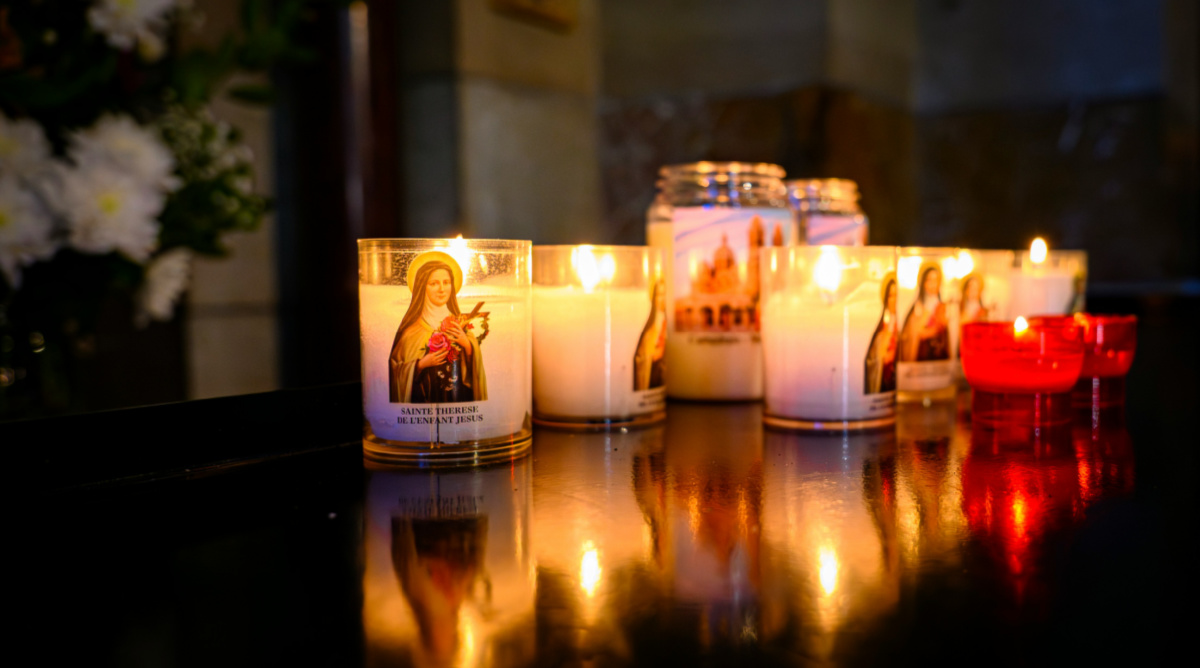
Liturgical living extends the grace of the liturgy into our homes and routines. It can be simple: lighting Advent candles in December, praying a novena to Saint Joseph in March, honoring the Blessed Mother in May, or observing periods of fasting or feasting in harmony with the Church year.
These practices help us “dispose our days in Thy peace,” as the Canon of the Mass proclaims.
What a gift the Church gives us in the seasons of life, nature, and liturgy! And how beautifully they move together each year. Let us respond generously to the invitation to remain in this divine cycle, moving from one season to the other and receiving the grace and wisdom the liturgical and natural seasons offer in every season of life.
Entering Advent with Intention
As we stand at the beginning of a new liturgical year, Advent invites us to root ourselves in God’s divine cycle. For practical help entering more deeply into the liturgical seasons, I invite you to download my free devotional guide, Praying the Liturgical Year, created to help you pray intentionally from the very first days of the new Church’s year—or whenever you choose to begin.
You’re also invited to join my Advent email devotional series, Waiting With Hope, which introduces you to praying with the liturgical calendar, starting with Advent. Each Sunday, you will receive a short reflection to help you enter prayerfully into the liturgical season.
May this new liturgical year lead you into deeper communion with Christ. May you find Him in every season—winter, spring, summer, and fall—and may your prayer life be transformed as you walk in the rhythm of His divine cycle.
______________________________________________
Image: Unsplash