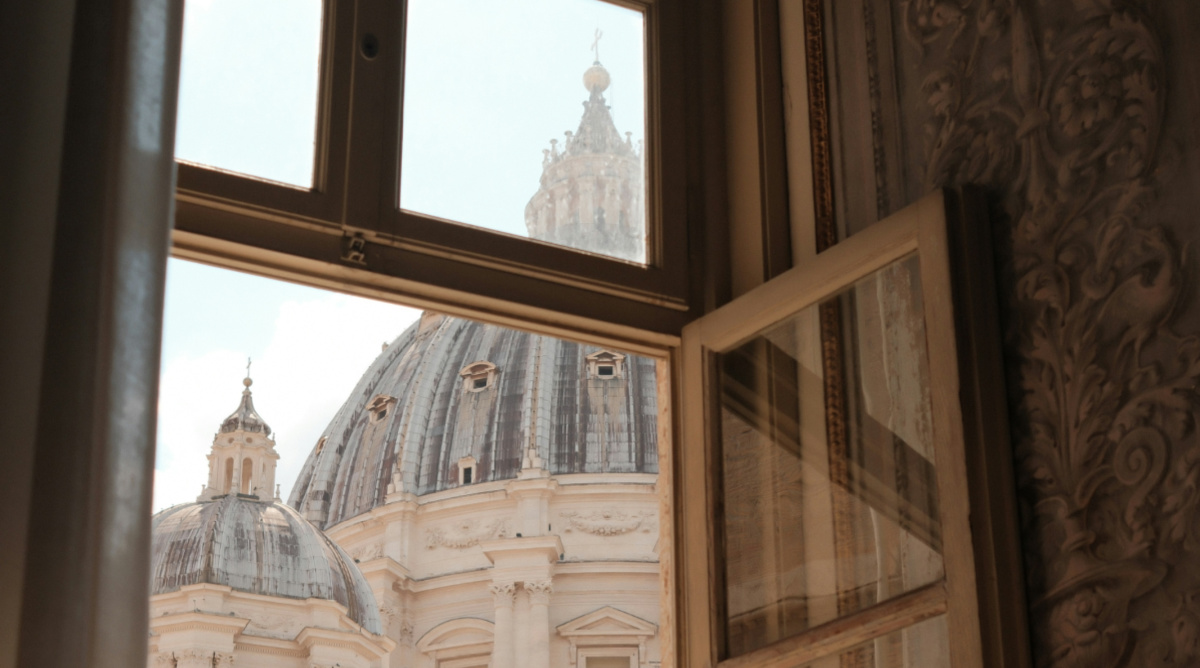
I thought we had hit the highlights: Pope Leo XIV had passed directly in front of us—just feet away—in his popemobile in Saint Peter’s Square. We’d entered the holy doors of each four major basilicas in Rome and ascended the Santa Scala (the steps that Jesus ascended to face Pontius Pilate). We’d walked the same streets of Assisi once traversed by Saints Francis and Clare and (at the time about-to-be) Saint Carlo Acutis. We celebrated Mass in a cave in which the archangel Michael had appeared, and were blessed by the gloves of Saint Padre Pio in San Giovanni Rotondo. But by far and away my favorite stop on our Pilgrimage of Hope was an unexpected highlight discovered in Pompeii.
In 79 A.D., Pompeii was a thriving metropolis when Mount Vesuvius erupted, encasing it in several meters of volcanic ash, where it remained hidden for centuries. It was rediscovered accidentally in 1599, but formal excavations only began in the 18th century. Today, thousands of visitors come each day to see architecture and artifacts preserved from first century life.
Yet a short walk away is the Shrine of Our Lady of the Rosary of Pompeii, the site of an even more remarkable restoration and resurrection. Its construction was brought about by brand-new Saint Bartolo Longo, once lost to Satanism, and now elevated to sainthood by Pope Leo XIV.
If Catholic parents, sending their children off to college, are looking for a patron saint, Bartolo Longo’s story highlights both their concern and a reason for hope. Bartolo was baptized Catholic and raised in the faith by a devout mother. His father feared sending him to Naples to be exposed to revolutionary ideas. He did end up in Naples—and, as his father feared—influenced by the wrong crowd.
His faith yielded to secularism, then to spiritualism and the occult. He was invited to participate in séances and had himself consecrated as a Satanic priest. With his fellows, he ridiculed and attacked the faith. He had special contempt and ire for the Dominicans—which would later prove ironic.
As he went on attacking the Faith and the Church, he found himself subject to spiritual attacks and oppression. He was also plagued with physical sickness, which took a severe toll on his health. He was given to nightmares and mental and emotional torments, but continued to seek answers from false spirits. Although he became a lawyer, even his non-religious friends noted his failing health.
Ironically, this came to a head when Bartolo sought the counsel of his dead father via a séance. That night in a dream, his father begged him to return to the faith of his childhood.
He confided this to a professor friend who pushed him to talk to a priest—in fact, a Dominican. Reluctantly, he agreed and began a process including confessions and exorcisms. Finally, on the Feast of the Sacred Heart, he received Holy Communion in the Church he had once attacked. He found the heavy darkness lifted.
Then there were interim years in which he became a Third Order Dominican, taking the name Brother Rosario, and finally, he found himself in Pompeii.
This Pompeii was poor, corrupt, and beset by robbers and widespread ignorance, even of the faith. There was a priest there, but he was negligent, and there were rats and insects active even in the altar area. Bartolo was deeply discouraged.
But Bartolo was soon tempted to a more alarming discouragement. Voices from the Satanic world he had left suggested that the satanic priesthood was permanent and irrevocable. He was terrified that perhaps all of his efforts were in vain and that he could never be saved. Near despair, he cried out to God.
Then he remembered the words of his Dominican friend, “Whoever propagates the Rosary will be saved.”
Bartolo committed then and there to promoting the Rosary, a promise he lived out until his death. He was also known for his apostolic works and charity—some can still be found in Pompeii today, in the form of schools and orphanages. But at the center of these sits a shrine—his primary work of love.
The story of the shrine—today known as the Sanctuary of Our Lady of the Rosary of Pompeii—is itself a story of resurrection and restoration.
Bartolo longed to honor Our Lady of the Rosary in a painting that would be the centerpiece for the church. He found one that he loved, but he could not afford the price. Instead, he was offered one that was essentially equivalent to a thrift store find. It was of poor artistic quality, and it was damaged and dirty. Our Lady lacked beauty and St. Dominic “looked like an imbecile.”
But Bartolo had no choice. He accepted it as it was and arranged for the painting to be brought to Pompeii. Because the carter bringing it was unaware of the nature or purpose of the package, Our Lady arrived in Pompeii on top of a cart of manure.
Bartolo sought to restore the painting and to build a new church in honor of Our Lady. But despite great labor, he made little progress. Then Our Lady herself got involved—and miracles began to be attributed to the image.
During this time, Our Lady appeared to Fortuna Agrelli, a girl in Naples who lay dying, promising to cure her if she made a Rosary novena—what today we know as the 54-day Rosary novena. She was healed and the devotion spread, along with devotion to Our Lady of Pompeii.
(I did not know, when I sought and received multiple miracles from my own 54-day rosary novenas, that I owed their origins to Bartolo Longo and Our Lady of Pompeii.)
Today, this once close-to-worthless painting has been restored by master artists—and her crown is encrusted with exquisite diamonds. The basilica—one of few directly under papal authority—draws its own thousands of pilgrims. The hallways are lined with ex voto—exquisite artwork honoring the many miracles that Our Lady of Pompeii has obtained from her Son.
Our pilgrim group prayed in front of this picture—then headed down the hallway to then-Blessed Bartolo Longo chapel. Beneath the altar lies the body of this one-time priest of Satan now saint—just above him, our chaplain says the words of transubstantiation. Bread and wine are changed into the Body and Blood of Jesus. We pray that we, too, might be transformed.
And I could not help but remember a specific rosary of my own, many years ago.
I was reflecting on Our Lady’s request that we pray it “for sinners”… I imagined my prayers going out to some mystery person of whose great need only Our Lady knew. Perhaps someone dying alone in the remote reaches of Africa or Asia. Perhaps someone on the edge of doubt and despair, or facing a critical decision between good and evil. Perhaps a great sinner in need of conversion.
As I prayed, I found myself wondering more about this mystery person and wishing I might be able to see the conversion first-hand. Wouldn’t it be fun, I mused, to see someone specific whose life was saved by the rosary?
The answer was swift, and tinged with gentle laughter: “Well, you’re one of them.”
Now, as I prayed in Pompeii, I realized that I had once imagined my rosary saving someone from the darkness of the occult like Bartolo Longo. But more likely, it was the prayers of a one-time priest of Satan that helped to save me.
Saint Bartolo Longo—pray for us!
______________________________________________________________________________
Bibliography:
Marek Wos. Bartolo Longo: From Priest of Satan to Apostle of the Rosary. Marek Wos, 2025. Kindle.
Ann M. Brown. Apostle of the Rosary: Blessed Bartolo Longo. New Hope Publications, 2004.
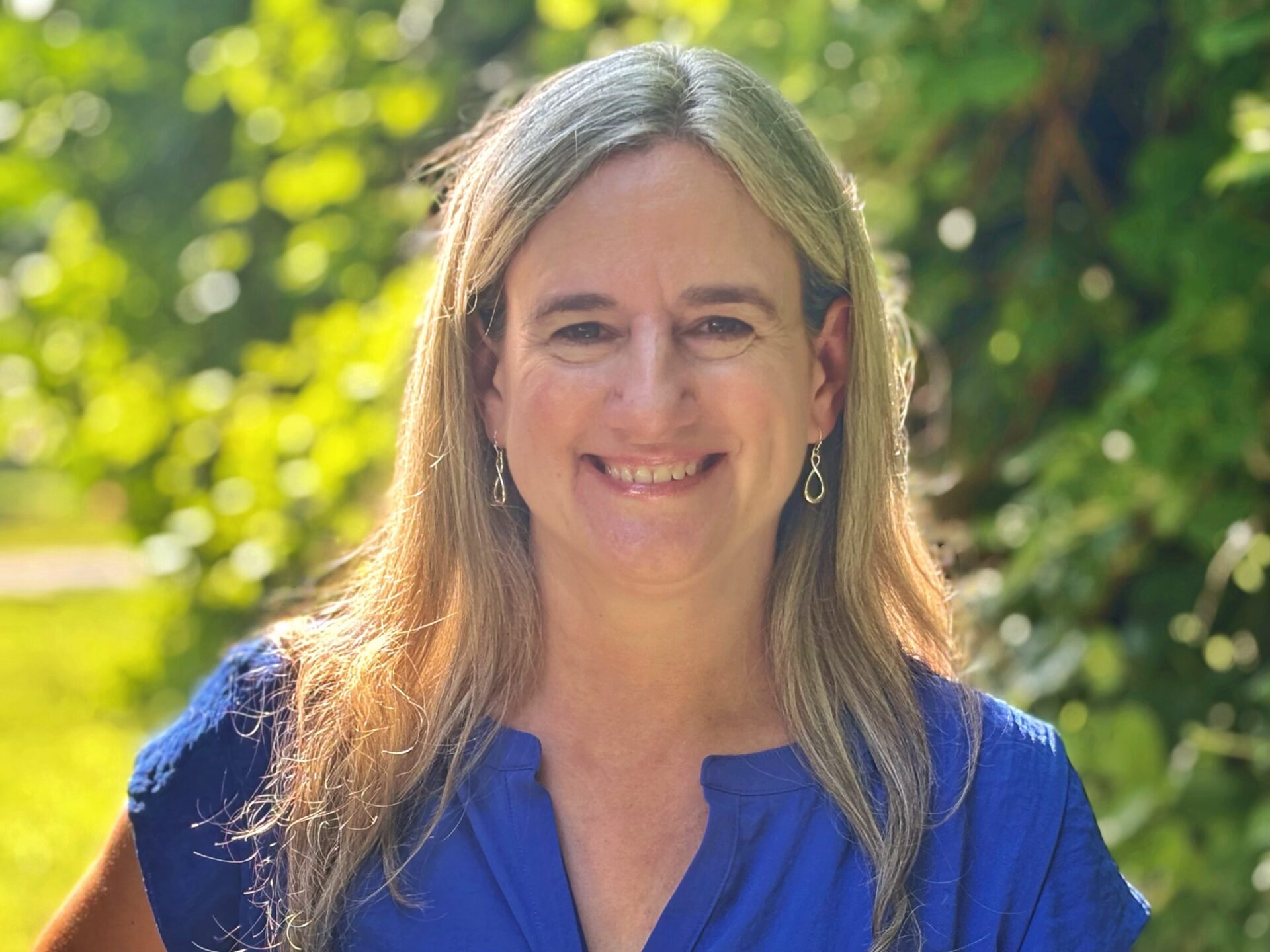
Photo courtesy of the author.