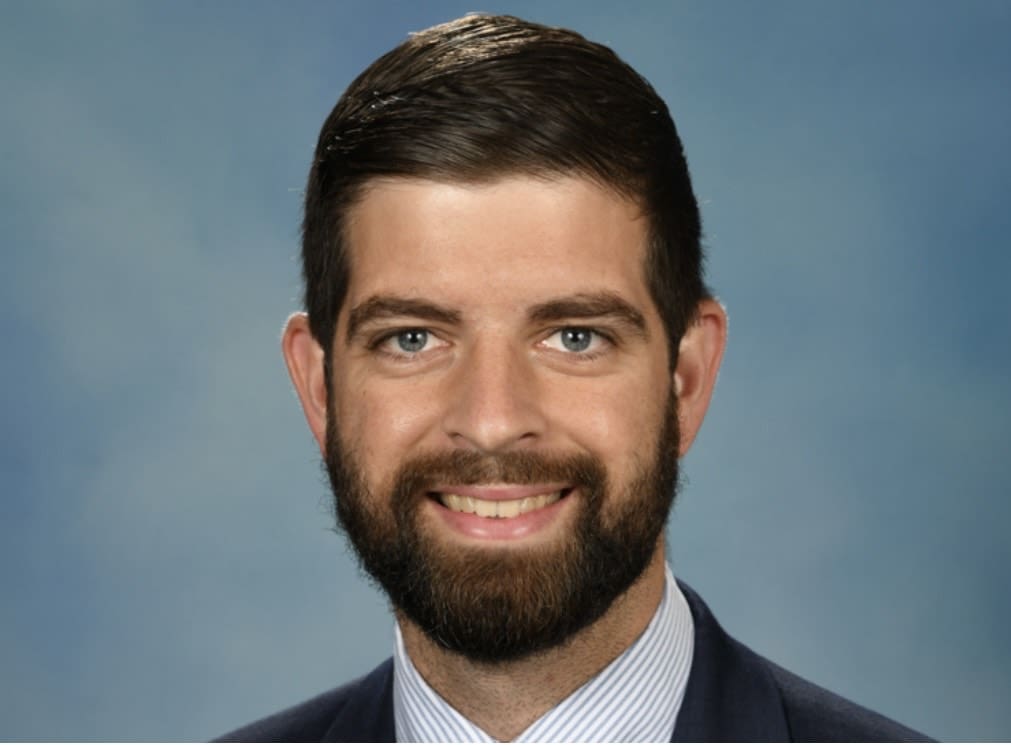
Pope St. John Paul II was a giant of a man. He was a captivating person, priest and pope who impacted countless lives. As a theology teacher, my respect for JPII revolves around his witness, his ability to write coherently and powerfully about the faith, and the way he interacted with crowds and individuals. I have more intentionally studied his philosophy, theology and life over the course of the last year and something has stood out as his defining characteristic: his intimacy with the person of Jesus Christ.
The pope was known for his smile, his travels, his ministry with youth, and for his public witness of suffering. Through everything and behind all aspects of his life, was his commitment to a personal encounter with the living Jesus. I experienced this through reflection of the life and writings of JPII in light of the challenges within the health of my own family (that of my mother and wife).
My mother had a kidney transplant last June after battling with a two-year stint of an incurable autoimmune kidney disease. Then a few weeks lates, my wife was in the emergency room for headaches and tingling. The doctors found a cyst near her brain, which needed to be removed in August. In the weeks leading up to these two events, my book choice was: Let Me Go to the Father’s House: John Paul II’s Strength in Weakness.
In a providential way this book prepared for me what lay ahead. The book is written by the doctor who cared for John Paul throughout his pontificate. There is a special stress on the last years of his life, but a moment from his childhood stood out to me the most. At the funeral for his older brother, the young Karol remembered a momentous moment. His father stood at the casket of his brother, with his hand on the coffin. As he stood there, Karol could hear his dad faintly repeating, “You will be done, your will be done…”
The steadfast reliance of his father on the Mother of God and on trust in the will of God in the face of suffering produced the soil for a life filled with profound intimacy with Christ. It was through the sufferings of his life that John Paul leaned into this intimacy, and in which it flourished most abundantly.
In reflection on the turn of the new millennium, the pope wrote an Apostolic Letter entitled Novo Millennio Ineunte (At the Beginning of the New Millennium) which expressed the same beautiful faith. The entire letter is a masterpiece on the Christian life. In the section on prayer, the pope wrote the following concerning the pursuit of holiness:
“This training in holiness calls for a Christian life distinguished above all in the art of prayer. The Jubilee Year has been a year of more intense prayer, both personal and communal. But we well know that prayer cannot be taken for granted. We have to learn to pray: as it were, learning this art ever anew from the lips of the Divine Master himself, like the first disciples: ‘Lord, teach us to pray!’ (Lk 11:1). Prayer develops that conversation with Christ which makes us his intimate friends: ‘Abide in me and I in you’ (Jn 15:4). This reciprocity is the very substance and soul of the Christian life.”
The early moment of Karol’s life at the casket of his brother showcased the friendship that his father had with the Lord. This was further ratified throughout the entire life of the pope as he committed to daily prayer. In the experience of the suffering of my mom and wife, I saw that suffering was a pathway to deeper intimacy with God. I saw that prayer is training. It is a training that equips us to see the world from the perspective of the divine friendship that we are invited to live out.
This friendship is not meant to be superficial. Jesus is constantly drawing us deeper into his heart and challenging us to go deeper than surface-level prayer. He desires for us to have an intimate friendship with him that can carry us through any suffering and conquer any evil. Intimacy, however, does not merely serve as a tool to travel through tough times. Intimacy is entered into for its own sake. The love of our God is so great that His greatness becomes lowly in order for us to gain access to Him. As John Paul’s father knew, “the will of God” is to be in relation with Him.
If we desire to respond to this divine intimacy, then we are called to carve out time each day to spend speaking with the Lord and hearing Him speak. Doing so will provide us with the fertile ground of friendship with Christ and make us into the holy ones who chant prayer as our one and only anthem. For prayerful intimacy is the entire purpose of our lives.
____________________________________________________________________
Image: Unsplash