In order to secure our true liberty, even while we were enslaved to sin, Christ suffered the night of death and 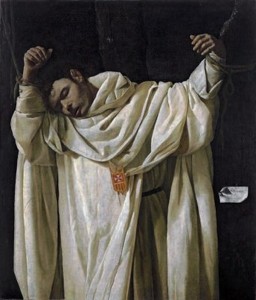 ransomed us by His blood. This is why the Lord respects human freedom, even when it is the source of great sorrow. Aware of our frailty, God does not overpower our freedom but delights to work through it in a very gentle and beautiful way. As a result, it is easy to frustrate His work in us. At the same time, we can also order our lives to allow Him greater freedom to accomplish His purpose in us – and when we do this, nothing can separate us from the love of God. To this end, St. John of the Cross counsels souls to use their liberty to imitate the Lord. He proposes that this imitation, if made with loving devotion, prepares the soul to welcome the wondrous freedom that our Savior established in His sacred humanity and that He is working to establish in ours: the freedom to be filled with God.
Because it is so mysterious, hidden and secret, the Carmelite mystic describes Christ’s work of spiritual freedom in us as “night.” Tenderly working with great power within our freedom, the Word of the Father envelopes the soul in the liberty of love even as the soul remains completely unaware of what He is doing or how He is doing it. It seems that only in the darkness of this spiritual night is the Light Himself able to lead us out of the prisons we make of our own egos.
Divine freedom is hidden in difficult events. St. John of the Cross suffered captivity, not allowed to see the light of day for months, in the effort not to betray those souls whom he had helped come to taste the liberty of prayer. It was a battle of wills between himself and his tormentors. They wanted him to renounce the spiritual freedom he was promoting and in exchange they offered him a very comfortable life of solitude, study, and prayer. He was not impressed. So they starved and beat him, trying to break his obstinacy.
How did he survive? In the darkness of his cell in Toledo, a deep faith allowed him to drink from the mysterious river of Divine Love that freely ran through that brutal experience in ways that could not be seen. It was in the physical darkness of night that he made his daring escape even while his captors slept.
Night, as a spiritual reality, humbly reminds us how little we ever understand of the ways of the Lord. One of my students was an old Hillbilly who had served our country in Vietnam. He suffered many difficult kinds of captivity in his life – substance abuse being one of them. Although he was discerning the permanent diaconate, he was not able to complete his formation, and never was ordained. But he had a servant’s heart and loved generously and above all wanted to serve the Lord. There was a strong, suffering devotion in him for God, his family, and the Church, even while he felt rejected and out of place. The fight for true liberty was in him even though he was tormented by all kinds of disappointments and personal failures. He died a couple years ago in a boating accident leaving behind his wife and adult children.
One of the last times I saw him, we talked about his military service and the long-term effects of war on a man. We talked about social and political freedom, and elements in our culture that worked against the truth that authentic liberty needs. We also talked about spiritual freedom as the liberty by which the truth of every other freedom was safeguarded. He later gave a hunting knife to my son with these words etched onto the blade “Freedom is not free but bought at great cost, the cost of blood.”
For my friend, this was not merely a political reality that he fought for, but a spiritual one by which he strove to live. To purchase our freedom, Christ died for us. It is in this freedom alone, the freedom by which He laid down his life for us and by which we lay down our lives for one another, that He can freely enter into our lives. Our faith does not exempt us from fighting for this freedom. It enables us to. Sometimes this fight needs to be social and political. Always this battle is personal and spiritual.
To enter the night of spiritual liberty, Saint John of the Cross counsels imitation of the Lord’s own freedom. We gain insight into this freedom and how it applies to us through a prayerful study of the Lord’s life. If we study the life of Christ on our knees and ready to be pierced to the heart, the divine splendor of the Redeemer’s human liberty continually overwhelms us with wonder. In Him, God’s freedom and man’s freedom mysteriously coincide. In his humanity, the Son of God was totally sovereign to live every moment for the honor and glory of the Father no matter His poverty or perilous circumstance, no matter the political or cultural forces of His day, no matter the corruption or injustice He confronted. The visible image of the Invisible God, He wanted to manifest the mysterious love of the Father with every heartbeat love allowed and the Word of the Father knew the freedom never to do anything other than follow this noble passion wherever it led.
To imitate the Suffering Servant, we must fight for this same freedom by renouncing everything in our lives that is not for the love of God. We cannot accomplish God’s will by our own unaided efforts, but we can make space for God’s freedom in our freedom by renouncing ourselves, picking up our cross and following our crucified Master. Striving to live with the same liberty by which the Risen Lord lives opens us, avails us, to a mysterious darkness which the world does not understand, a beautiful night in which all that is good, holy and true about our humanity breaks out of its captivity and even in the face of death comes into the fullness of life.
Note from Dan: Anthony’s fantastic book on prayer, Hidden Mountain Secret Garden, can be found HERE in print, and HERE in Kindle format.
+
Art for this post on Spiritual Liberty in the Night: Saint Serapius, Francisco de Zurbarán, 1628, PD-US author’s life plus 100 years or less, PD-Worldwide, Wikimedia Commons.