


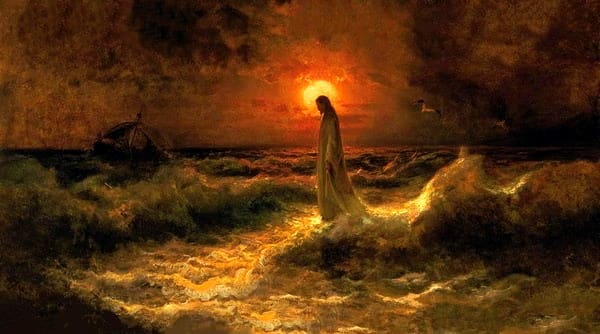
A Reflection from “The Miracle Book” by Anthony DeStefano
If you want to obtain a miracle, you must first understand what a miracle is.
The word “miracle” has two meanings: a strict definition and a more casual, generic use. It is similar with other words, such as “legend,” which, strictly defined, is a traditional story or myth, often about a historical figure, that has been passed down through generations. In everyday conversation, however, people might refer to anyone as a “legend” if he or she is exceptionally good at something—for instance, a famous athlete. The same is true of the words “hero,” “genius,” and “masterpiece.” Each of these words has a strict definition and also a more casual use.
So it is with “miracle.”
The definition of “miracle” is an extraordinary occurrence, perceivable to our senses, that causes wonder and amazement. It comes from the Latin word miraculum, which means “something wonderful” or “a marvel.” More importantly, a miracle is the result of some hidden, divine intervention in the natural order of things, either directly by God or by one of His agents—such as an angel or a human being. These interventions usually do not violate the laws of nature; rather, they are beyond those laws, or they supplement or intensify them in some mysterious way.
Such a distinction might seem small, but it’s quite important. God respects the laws of nature. After all, He created them. He created the universe and everything in it, including the laws that govern it. He created the laws of physics. He created the laws of chemistry. He created the laws of human physiology. When He interferes with these laws and performs a miracle, He doesn’t often break them blatantly by suspending the natural order; instead, He interacts with them in a way that changes the outcome of a particular situation.
That sounds complicated, but human beings do something similar all the time. If the weather is cold and rainy, we don’t try to magically raise the temperature before leaving our homes. What we do is put on a coat and hat to keep us warm and dry. Thus, we “interfere” with nature, in a manner of speaking, but we don’t break any meteorological laws. We simply use our abilities to supplement nature and change the outcome. For example, humans have devised a way to fly through the sky using airplanes and helicopters, but we’ve accomplished this extraordinary feat by taking advantage of the natural laws of aerodynamics, not by contradicting the law of gravity. Humans have also found ways to treat coronary valve disease, not by contradicting the laws of physiology but by supplementing them with the introduction of various kinds of artificial valves.
Well, God has much greater power than we do, and consequently, He has a much greater ability to supplement the laws of nature to achieve His aims. For instance, in the Bible and throughout history, there are numerous examples of people who have been exposed to intense heat and fire and yet, because of their prayers, have not only survived but have not even been burned. How could that be? Obviously, miracles were involved. But when God performed those miracles, He didn’t change any of the laws of chemical combustion. He didn’t use any form of wizardry to eliminate the heat that comes naturally from fire. Rather, He most likely protected those people by surrounding them with some kind of mystical fireproof covering of His own design—just as we use our human powers to put on a jacket to protect us from the cold or to put on fire-protective gloves to protect us from intense heat. In other words, those miracles involved no infraction of the laws of nature, just a displacement. As C.S. Lewis put it: “The divine art of miracles is not an art of suspending the pattern to which events conform but of feeding new events into the pattern.”
Thus, when Moses parted the Red Sea in the book of Exodus, God didn’t necessarily violate the laws of physics and marine biology by making a whole tract of water magically disappear. Instead, He may have simply introduced a “new event” into the pattern of nature—perhaps sudden, unexplainable winds or a supernatural phenomenon that had the effect of displacing the water of the Red Sea in such a way that the Israelites were able to walk along its seabed.
This doesn’t mean that God can’t break the laws of nature when He performs miracles.
God can do anything He wants. And certainly, that is the case with some of the miraculous actions of Christ in the Gospels—most notably His own Resurrection, something completely out of the realm of natural events or powers. But it’s not something He usually does. It’s not His preferred way of performing miracles.
Why is this fact so important? Because it’s a key to understanding the mind of God. God created the physical universe in a certain way and with a certain purpose. He governs that universe, in part, through various physical laws of nature. The result is a marvelously delicate, beautiful, stable, and harmonious place. Similarly, God created another realm of existence called the supernatural world. This is the world of the spiritual, the world of Heaven and the angels and grace. These two realities—the natural and the supernatural—can and do interact at times, but only under the governing providence of God.
The bottom line is that God is a God of order. He takes His creation seriously. When He wants to work a miracle, He doesn’t reach down into the world with His divine hand and violently break all the natural laws as if He were a thief breaking into a jewelry cabinet. He respects those laws and interferes with them only when He has good reason and only with infinite care and in certain specified ways. He’s not a magician or a conjurer or a wizard. He’s a loving Father who supplements the natural laws with his supernatural power in a very elegant, seamless, purposeful, and pastoral way.
In fact, true miracles occur far less frequently than even religious people think. An actual, bona fide miracle—according to the strict definition of the word—necessarily involves unexplainable supernatural activity, such as protection from fire, or the restoration of sight to someone who is blind, or the overnight disappearance of a massive malignant tumor, or the parting of the seas, or the raising of the dead. For something to qualify as a miracle according to theological standards, it must not be explainable by natural causes, no matter how extraordinary.
Indeed, when presented with a possible miracle—such as those investigated to advance the cause of someone’s canonization—the Catholic Church always starts with the presumption that a miracle has not occurred and that the person making the claim for it is either mistaken, ignorant, self-deceived, or, in the worst case, trying to deceive others. It is only after an examination of the facts—often conducted by a bishop and a special commission of scientists and other experts—that a determination is provided to the competent ecclesiastic authority as to whether the alleged miracle is “worthy of belief.” And this investigation is often long and rigorous and includes an assessment of the mental health of the person making the claim, the possibility that there could be a human explanation, the possibility that the event could have diabolical origins, and a study of the “good fruit” that has resulted from the occurrence.
In other words, the Church starts with a healthy dose of skepticism when investigating any alleged supernatural occurrence and utilizes several objective, verifiable criteria to determine its legitimacy.
+

This article on miracles is adapted from the book The Miracle Book by Anthony DeStefano which is available from Sophia Institute Press.
Art for this post on a reflection from The Miracle Book: cover used with permission; Photo used in accordance with Fair Use practices.