To be a Christian is to be plunged into the mystery of the Trinity.
This mystery is one of both primordial and eschatological love for humanity. Just how radical this love is defies any attempt to articulate. Yet the Word of the Father has spoken it once and for all in the silence that followed his last wordless cry. The eternal meaning of this love confronts the ancient hostility that man has taken against God. This hostility overshadows all that is good in the human heart, but this man-made could not hold back the light of God’s uncreated love. This light is the life of humanity. It shines on us through the Cross because on the Cross, the Word of the Father reveals a love that no sin, or weakness, no wound or imperfection, no power under the earth, on it or over it can ever overcome.
Since the definitive triumph of good over evil is revealed in the Cross of Christ, then Christian prayer that is under the seal of that Cross also knows this victory. Put another way, participation in divine life and love flows through the sufferings of Christ. Christian prayer dares to enter those suffering depths.
Christian prayer dares to enter those suffering depths.
The reason such access could only only be given at the price of Christ’s blood pertains to the whole reality of sin. We have in our hearts a hostility to the Lord that prevents us from entering into communion with Him. Contrary to some who accuse God, He is not the stumbling block. Our own indifference attempts to impede His mercy. His justice and righteousness is not the scandal. The scandal is our own hostility. We, by our own actions, close the door to the One who has come to us out of love. He suffers our lack of hospitality even as it is expressed in betrayal, denial, abandonment, the abuse of power, humiliation, and violent aggression. As prayer enters into this mystery of suffering, it discovers the life that he yearns to give. When the Word became flesh, he took into himself our hostility and suffered it in his obedient love.
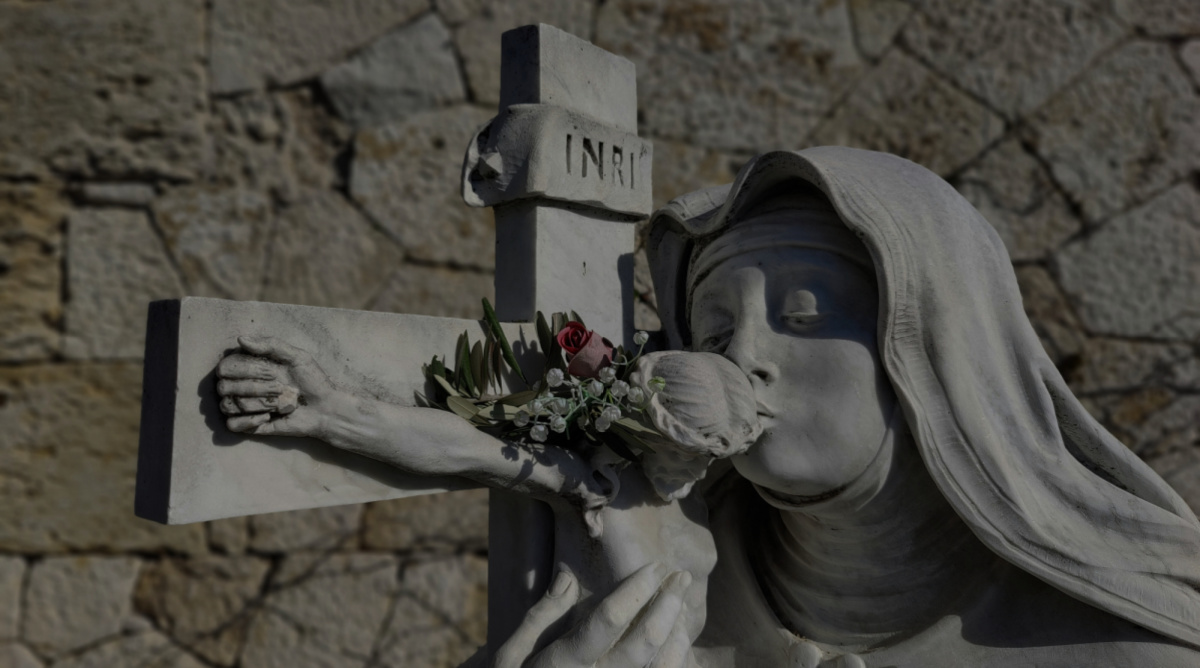
Thus, the wounds of Christ, wounds our own hostility has caused, have become sources of grace. For the love of the Father revealed by Christ is not overcome by the chaos in our hearts. In prayer, we find this chaos and if we humbly beg, the Father pours his mercy through it. The Father touches the misery, the absence of love in us, through the suffering of His Son, and when He touches our wounds He transforms them from storms of hostility and darkness into sources of divine kindness and light. Such is the power of the Cross. The wounds of Christ heal our wounds and transform them into new vessels of his love.