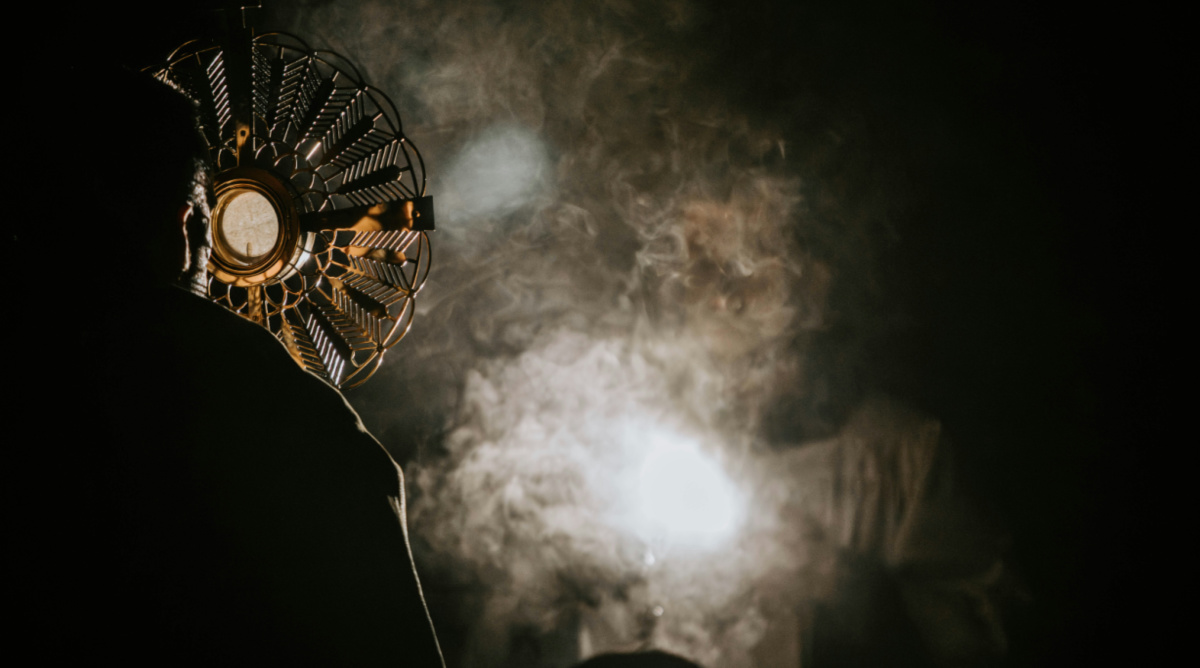
There is a very high point at every Mass where the priest elevates the Eucharist and speaks the words, “Behold the Lamb of God who takes away the sin of the world.” Hopefully, at that moment, all eyes are moved to, in fact, behold the Lamb of God. These words originally came from Saint John the Baptist’s mouth as he testified to Jesus and were deemed significant enough to be proclaimed at every Mass. John the Baptist was a man of great faith, a faith we should strive to emulate. While his time in scripture is short, there is a lot to be learned from the faithful man.
Luke’s Gospel deals with the announcement, conception, and birth of John the Baptist. When the Angel, Gabriel, appeared to John’s father, Zechariah, he did not believe the angel’s words that Zechariah’s wife would conceive a child because of their advanced age. Because of this, Zechariah was rendered mute until the birth of his child. Zechariah’s lack of faith in the Lord’s plan inhibited his ability to communicate and made it very difficult for him to minister to the people whom he served as their priest. This lack of faith is even more shocking coming from Zechariah because Luke tells us that he and his wife, Elizabeth, “were both righteous before God, walking blamelessly in all the commandments and statutes of the Lord” (Lk 1:6). Zechariah’s plight can teach us a lot today. The first thing we learn is that a person can do everything right, but still lack faith. Being obedient and following all of the precepts of the Church is a very good thing, but it does not necessarily follow that because you do so, you’re completely trusting in God in all things. In doing all of the right things, we can fall into the sin of pride and think that we’re in charge, which is not the case – God is. This leads us to another point Zechariah illustrates: when we lack faith in God and His plan, it is very difficult for us to lead others on a path of faith. We may not become literally mute, but we certainly experience a kind of spiritual muteness at times in our lives. If we do not believe in the work God is doing in our lives, how can we expect those around us to have faith in the work He is doing in theirs?
Zechariah’s story is important because it serves as a juxtaposition with that of his son, John, who has a deep faith in what the Lord is calling him to do. The Gospel of John tells us that John the Baptist did not know for whom he was preparing the way until he saw “the Spirit descend from heaven like a dove, and it remained on him” (Jn 1:30-33). This tells us that the entire time John lived in the wilderness, eating locusts and wild honey, praying, and preparing the way for Jesus, he did so without any clear knowledge of who he was doing this for or why. He may have had some insight into some extent we cannot know, but he certainly did not yet know the fullness of his role in God’s plan. He was acting in complete faith in the divine plan. John’s faith provides a remarkable example of how we should conduct each of our own activities with a heart of faith. How often do we go through different experiences that make us question “why?” or “how long?” and not trust that it is all part of a process of growth that God has for us in order to prepare the way for the Lord in our lives? When the Spirit descends on Jesus, John has an “ah-ha moment” in which everything suddenly makes sense. We also have those moments where we come out on the other side of something and realize the greater purpose or good that our time in the wilderness has brought about.
Finally, John the Baptist teaches us much at the end of his life. Herod arrested John and imprisoned him because John had been chastising him about being unlawfully married to his brother’s wife. In other words, he was preaching God’s will to Herod and Herod did not enjoy hearing the truth. However, Herod did recognize that John was a holy man and did not want to kill him out of fear. So, while Herod may have been living a sinful life, he was not completely blind to what John had to offer. When we go around planting seeds of truth in the world, we are often not well received by others, but Herod shows us that this does not mean we aren’t affecting them with those seeds. Of course, in another sinful moment of lust over his wife’s daughter, Herod finally has John beheaded after Salome asks for his head on a platter. In the end, John became a martyr, refusing to live any other way but by the will and law of the Lord and leading others to do the same. Herod’s sin led John to a bodily death, but John’s faith in God led him to eternal life. Sin will always lead us into spiritual death, so it is always better to die in our bodies by denying our senses of sinful things and thus become martyrs ourselves for our faith.
This week, take some time to read all four Gospel accounts of the life and death of John the Baptist. Examine your own life in this context. Where are you more like Zechariah or Herod and where are you more like John? How can you be more fearless and bolder in preparing the path for Jesus for the sake of others in the world.
_____________________________________________________
This post was originally published on Catholic Heart Ablaze and is reprinted here with permission.
Image: Unsplash