A Reflection from “Humility of the saints” by Patrick O’Hearn
The humble man, even though he be great in the eyes of the world, will esteem himself less than others, for he will always suspect that their internal greatness may far overreach his insignificant external greatness. He will therefore not flaunt his accidental superiority before his fellow man, for to do so is to prove one is not truly great. The really big men are the humble men: they are always approachable, kind, and understanding.
—Venerable Fulton J. Sheen
The saints never chased greatness in the eyes of the world. They knew their true worth was found entirely in the gaze of God. Although others may have deemed them “holy” and “great,” they knew that God was everything and they were nothing. They also recognized that they were loved sinners capable of committing the greatest sins if not for God’s grace. Recognizing the truth about themselves, the saints shied away from worldly esteem and praise. To be esteemed means to be held in high regard or valued. The word esteem comes from the Latin aestimare, “to value, determine the value of, appraise.” Venerable Fulton Sheen stated that the truly humble person “will esteem himself less than others,” because humility allows us to see ourselves as we truly are, and thus rightly determine our value.
Jesus values each of us greatly as His beloved sons and daughters—so much so that He would be crucified all over again if it were necessary to save us, even if we were the only soul left on earth. Yes, Jesus prized our lives more than His own, giving every drop of His precious blood to save us. Is that not a hallmark of humility—seeing others as having inestimable worth, which first begins with seeing our own value? Our self-esteem must be founded on how God values us.
Instead, for many of us, our self-esteem is tied to how other people value us. We want to be noticed for what we do rather than for who we are. We parade our trophies in our rooms, plaster our walls with our degrees, and show off our intellectual capabilities so we can feel superior to others. We desire to be esteemed by the world for attending this prestigious school, living in this neighborhood, belonging to this country club, or even attending this parish. We allow our possessions and social status to define us. When we lord our achievements and talents over others or seek the esteem of man, we set ourselves on the path to perdition. A spirit of condescension and haughtiness soon follows, which is a diabolical spirit, whereas the spirit of humility is an angelic spirit.
The prophet Isaiah writes of the suffering servant, “He was despised, and we esteemed him not” (Isa. 53:3). These words foreshadow Jesus, the true suffering servant, for on the Cross He was mocked, not esteemed. So if we seek to be conformed to Christ Crucified, we must flee from human esteem. At the same time, esteeming others more than ourselves does not mean we have an inferiority complex, where we believe that we are no good. The devil wants us to believe that we will never be good enough and that we can never measure up to others, but this is not what God wants for us. The truth is, we shouldn’t be concerned with comparing ourselves to others at all. Only God can look into the human heart. Still, like the saints, we can and should want others to be esteemed more than ourselves. St. Paul gives wonderful advice on living out humility in this way: “Do nothing from selfishness or conceit, but in humility count others better than yourselves” (Phil. 2:3). The saints valued others more than themselves because they knew the truth about themselves, but also because they saw Christ in their neighbor.
Mother Angelica offers a powerful reminder to us when we are chasing the esteem of the world. She once said that “where most men work for degrees after their names, we work for one before our names: ‘St.’ It’s a much more difficult degree to attain. It takes a lifetime, and you don’t get your diploma until you’re dead.” During their lives on earth, the saints despised human esteem; now in Heaven, they are the most esteemed souls in the Church.
+
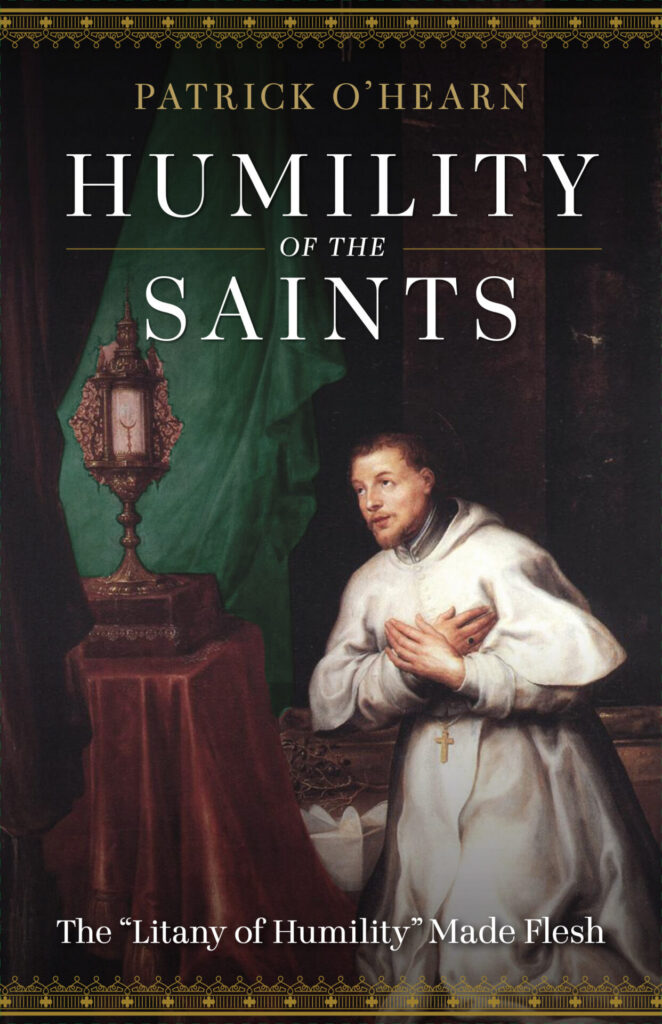
This article on the saintly art of humility is adapted from the book Humility of the Saints by Patrick O’Hearn which is available from Sophia Institute Press.
Art for this post on a reflection from Humility of the Saints: cover used with permission; Photo used in accordance with Fair Use practices.