5 Spiritual Lessons from CRPS That Shaped My Toughest Lent Ever
Two years ago, I had my toughest Lent ever, with more physical and emotional suffering – and spiritual warfare – than in any period of my life. It’s still hard to write about it, but I have (mostly) healed in body, soul and mind.
I’ve felt God asking me to share some of the lessons I learned about seeing God through the pain, surrendering, allowing others to help me, being joyful in affliction, and forgiving.
Waking up with Complex Regional Pain Syndrome (CRPS), “the suicide disease”
Never heard of CRPS? I had not either until 2024 when a foot and ankle surgery meant to relieve pain resulted in nerve damage and CRPS II.
I knew something was horribly wrong when I woke up from surgery. I had back surgery in 2021, and the searing pain I experienced after my foot and ankle surgery was significantly worse. My foot felt like it was being crushed, shocked, and burned in a fire – all at the same time. The swelling, redness, warmth and hypersensitivity lasted for months.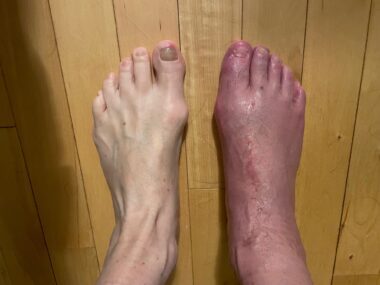
CRPS is – as the name reflects – extremely painful. The McGill Pain Scale ranks it above childbirth, shingles and cancer. It’s also been called “the suicide disease” since some contemplate or attempt suicide. It’s significantly underdiagnosed, with an average time of four years from onset to diagnosis.
Praise be to God, I was diagnosed just a couple of months after my surgery. I still have permanent nerve damage, numbness and pain, but through prayer, persistence and physical therapy – and above all God’s healing love – I can hike, bike and stay active.
Here are 5 spiritual lessons from my toughest Lent ever, when the pain was at its worst.
- Seeing God through the pain
The first few weeks after surgery, I spent 23 of 24 hours a day in bed, except two trips to the ER and doctor visits. I cried. I screamed. I was angry. I was scared. A former Ironman triathlete, I love to hike and bike. I could see the mountains from my house and wondered if I’d ever get back to them.
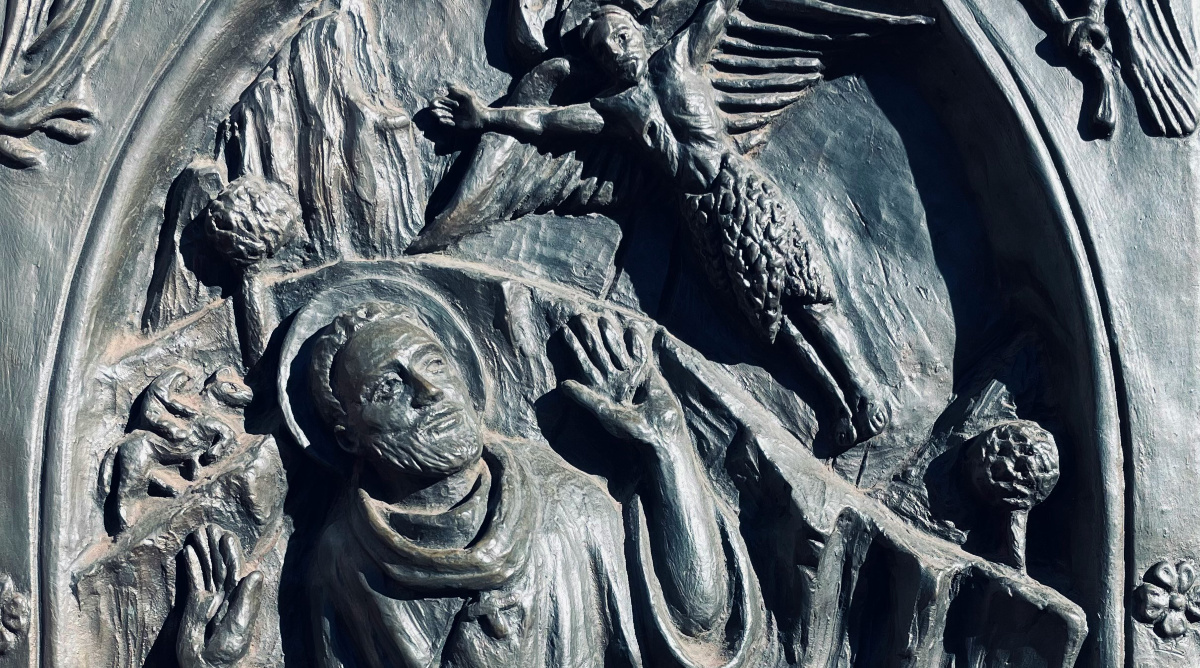
As I lay there, I visualized Jesus on the cross. I meditated on the soldiers hammering the nail into His foot, since that was the epicenter of my pain. With every electric show from my nerves, I reflected on how He must have winced when they drove the nail in.
I tried to join my pain with His suffering. I read the Bible (especially Job), many books and listened to podcasts about redemptive suffering. John Paul II’s 1984 Apostolic letter, “Salvifici Doloris” (On the Meaning of Human Suffering) helped me think about suffering as a way to grow closer to Christ.
Jeff Cavin’s book When You Suffer: Biblical Keys for Hope and Understanding gave me new insights. I recently listened to his podcast, The Value of Suffering, with key takeaways that continue to help me. Hundreds of times I listened to Fr. Mike Schmitz read Psalm 139. I tried to memorize it, especially these verses from the NABRE which made me feel Christ was close to me:
5 Behind and before you encircle me and rest your hand upon me.
10: Even there your hand guides me, your right hand holds me fast.
14: I praise you, because I am wonderfully made; wonderful are your works! My very self you know.
2. Surrendering brings freedom
Family dysfunction at an early age gave me the illusion I could take care of myself and didn’t need – or want – anyone’s help. My dad died when I was eight. My mom did the best she could until we lost most of our possessions in a house fire when I was a teenager. She then succumbed to the disease of alcoholism. Mom died of pancreatic and liver cancer when I was in my early 20s.
False promises of the type of feminism I preached for decades reinforced my independent self – and made me prideful. I didn’t know how to surrender to anyone, much less God.
Several years before CRPS, through my family, friends and work with Catholic organizations such as FOCUS and Ascension, my faith grew stronger and evolved. Instead of being a set of “rules,” I started to see a good God, who was in control and wanted the best for me – and for me to lean on Him.
CRPS forced me to completely surrender. I had no choice. I gave Him everything. I told Him that even if I never walked again, I would still praise Him. I would still try to be grateful and see the blessings around me. I prayed for healing, and acceptance.
I had experienced God’s faithfulness in the past, and knew His mercies were new every morning (Lamentations 3: 23) I started saying each morning, “Here I am, Lord, I’ve come to do your will, no matter how my day goes.”
I prayed the “Surrender Novena” many times. Surrendering is still hard. But it’s easier, and has given me a new sense of freedom and joy. I know God is ultimately in control and continually showing me His Love through people in my life – as long as I let them in.
- Letting others help me
A part of that surrendering included allowing others to be the hands and feet of Christ to me. That was – and still can be – harder than surrendering to God.
I would never have known the depth of my husband’s love if I hadn’t gone through CRPS. Poor Patrick climbed the stairs of our little house at least a hundred times a day in those first few weeks. With love, and without complaint.
He continues to try to keep my spirits up when my mind drifts into fears and away from God. He’s been Christ to me in many ways. I am so blessed and thankful God has given me his love as a gift.
A good friend brought the Eucharist to me as I couldn’t fathom even sitting in a pew. Many friends dropped off meals and checked in regularly to pray with me and encourage me to stay hopeful. Several helped out by walking our (very active) Lab. One loaned me her mom’s mobility scooter – an unexpected blessing, giving me some freedom to ride around town and on flat trails.
- Being joyful in affliction
When I asked God at the beginning of Lent in 2024 what I should do, I felt Him say, “Be joyful in affliction.” I smirked and cried, wondering how that was possible. It sparked my memory about Romans 12:12, “Rejoice in hope, endure in affliction, persevere in prayer.” I still frequently meditate on that verse.
Twenty years ago during a difficult period, I read Kahlil Gibran’s poem, On Joy and Sorrow. The stanza that resonates the most with me is, “The deeper that sorrow carves into your being, the more joy you can contain.”
The theme of balancing joy and sorrow related to the Virgin Mary is described so well in a recent book I read, Crowned with Grace: A Collection of Marian Titles and Devotions. Claire Dwyer writes, “Our Lady of Sorrows is the Cause of Our Joy because Mary enjoyed the happiness of suffering with Christ, suffering for him, and more than anything else, suffering as he did.”
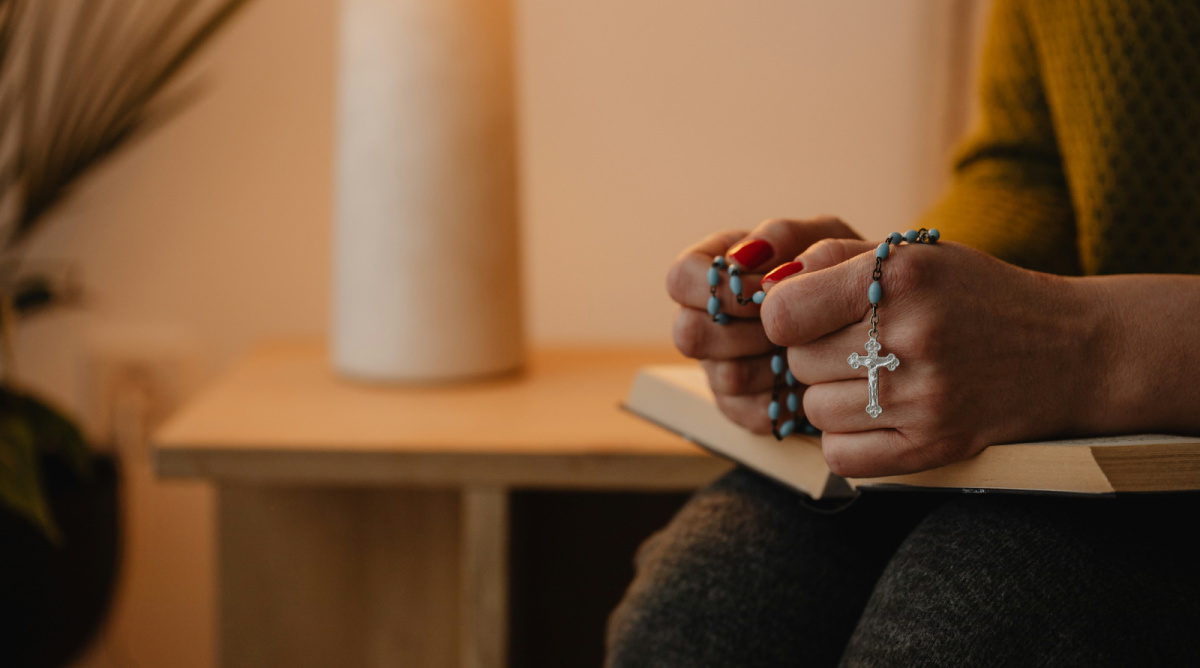
In my darkest hours, I asked God many times for strength to be joyful. Sometimes I managed a smile, yet the first few months were full of sorrow. I created a checklist for each day, which included journaling, writing down my blessings, praying the Divine Mercy Chaplet, Rosary, and reading Scripture.
Patrick took it upon himself to try to be the joyful one during my darkest days. He sensed when I started going into the rabbit hole of rumination and despair. He’d bring me flowers and a Reece’s peanut butter cup. Of Irish descent, he has a dry wit, which brought a smile to my face many times.
When people visited, I tried to be positive and focus on my progress, which was slow as a slug. I laughed with friends on the trail as I pinned the throttle of the mobility scooter, buzzing along at a brisk 4mph. I leaned into the handlebars and pretended I was 20 years younger, riding my motorcycle on the racetrack.
I embraced each milestone, such as my first time driving the car solo, my first ¼-mile walk without a crutch, and my first hike. I giggled nonstop for 20 minutes on my first ride on my two-wheeled bicycle, seven months after the surgery.
I venture to guess that many people have experienced this joy after achieving milestones during recovery, feeling like a child taking her first steps toward her loving father.
- To truly heal and embrace joy, I had to forgive
I know the doctor didn’t walk into the surgery and say, “Let’s mess up Leslie’s foot today!” But I was mad. Furious that I was supposed to be healed, and now had this horrible disease.
At first, the doctor minimized my pain and said it was “normal”. I knew it wasn’t. He didn’t know, but he really couldn’t have, as he had treated just one case of CRPS before me.
I had to eventually forgive him, but it took several months. In my pain therapy classes, I learned about the connection between anger and pain, and I knew to heal I had to forgive. I prayed about the forgiveness God has given me many times. I prayed for the fortitude and humility to forgive that doctor.
Then I had to forgive myself. Was it my fault for choosing him? I had researched the best doctor, but I kept thinking, “what if I’d gone with a different doctor and didn’t get CRPS?”
I eventually accepted that this was God’s permissive will, and I couldn’t keep blaming the doctor, or myself. I started to quit asking “why” and “what if,” and instead asked God to help me move forward.
Forgiveness gave me peace of heart, and allowed my soul to experience joy in a deeper way.
Thankfully, I now see the blessings that have come from the most intense suffering period of my life. I know that no matter what, my husband will always be by my side. I marvel at the mountains when I’m hiking and see His beauty.
I don’t know how I could have gone through this experience with CRPS without my faith. I know God’s love more fully now. I pray my story can give others hope amid their suffering.
___________________________
More on my CRPS story is in an article I wrote for rsds.org (News, published April 22, 2025): How Learning the Neuroscience of Pain Helps. It includes a link to a video about my journey with Alissa Wolfe, a pain specialist who taught me about the science of slowing down, and how to calm an overactive nervous system that amplifies pain.
I’m co-sponsoring a scholarship for her program this year again for someone with CRPS. Details can be found in the video description. Jade, the young woman with CRPS who received the scholarship last year, told me after she finished it, “I’ve found so much clarity that I am still capable of fully living my life and managing the pain I have.”