A Reflection from “Devotion to the Angels” by Fr. Henri-Marie Boudon
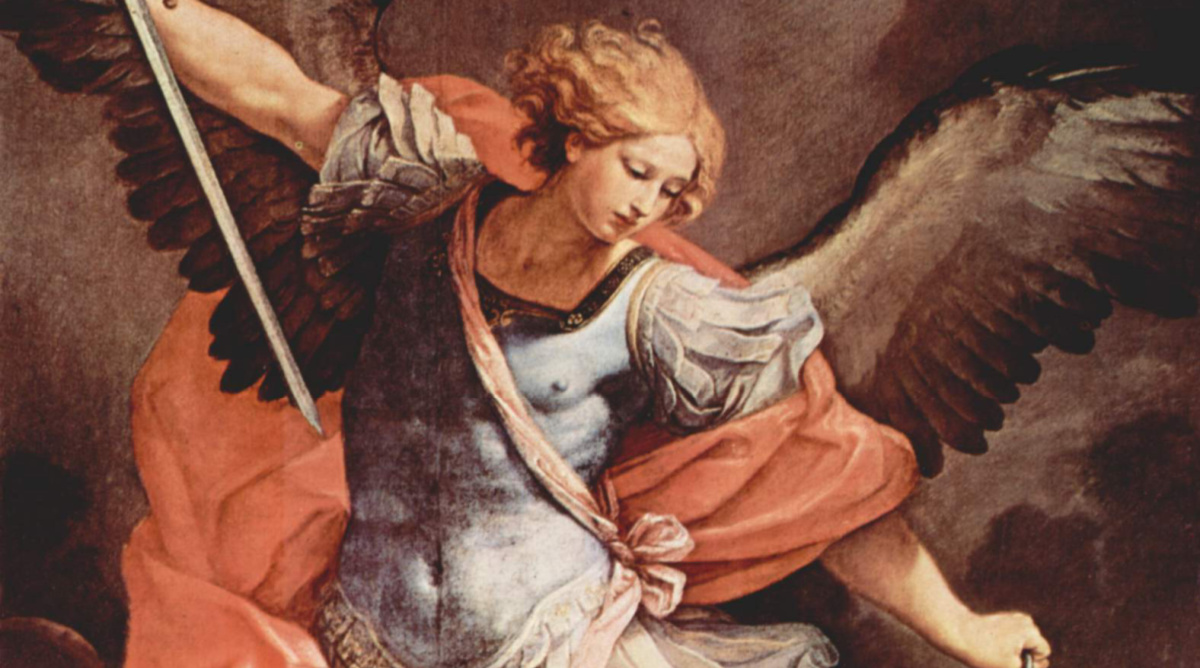
It was St. Michael who took up the defense of the honor of God against Lucifer, in the cause of the Incarnation of the Word; and St. John Chrysostom is of the opinion, that he was also one of the first to pay homage to Christ in the manger at Bethlehem on the day of His humble Birth. It is he who is the tutelary Archangel of the Church, and it is not without good reasons that he is believed to be the special guardian also of France. The signal aid which this kingdom has at times received from him is a strong proof of it. This great prince of Paradise has even chosen to have a place specially consecrated to him in this kingdom, within the diocese of Avranches, which at this day is popularly called Mont Saint-Michel, a place famous for the concourse of people who flock to it from all quarters, to honor this holy Archangel. It is he who assists souls at the dreadful hour of death, and who, according to the doctrine of St. Augustine and St. Bonaventure, not only assists them at that moment which decides their eternal destiny, but also introduces them after death into Heaven. He awaits the command of the august Mother of God to assist in a special manner those souls which she peculiarly favors: such is the opinion of St. Bonaventure. It is St. Michael, who is held to be the first of all the angels in glory, and the most exalted of the Seraphim. If, then, we love the interests of God only, we must love him; for he is the great saint of the cause of God, and of God Incarnate. If we love the Church, if we love ourselves, if we have any care for our salvation, if we desire to be helped at the last moment of life, we must honor him greatly in all the necessities of the Church: for the destruction of schisms and heresies; for the establishment of ecclesiastical discipline in all its vigor; for holiness of life in its prelates, and specially in the Sovereign Pontiff; for the preservation and increase of the faith in those countries where it already exists; and for the promulgation of the gospel in heathen lands.
St. Gabriel is also one of the highest of the Seraphim, and, like St. Michael, he is styled an Archangel, but that doesn’t mean that he belongs only to the eighth choir of angels; for this title of Archangel is common to all those who are highest in eminence among the princes of Heaven, just as the name of angel is applied indifferently to all these blessed spirits, of whatever order they may be, as well to the Seraphim as to the Angels of the ninth and lowest choir. It is St. Gabriel who was chosen by God to negotiate the mystery of the Incarnation; and those who believe that the Queen of Heaven had a special Guardian Angel believe that it was to Gabriel that the care of her was entrusted. And even according to the opinion of those doctors who think that the Mother of God had no Guardian Angel, but was attended by troops of ministering angels, St. Gabriel was one of the chiefs of these blessed bands appointed to serve her.
St. Raphael is also one of the seven great princes who stand before the throne of the Divine Majesty, as Scripture teaches us (Tob. 12:15): on this point there is no room for doubt. We have but to read in Scripture of the services he rendered to Tobiah, to love with a holy fervor this spirit of Heaven. It is hard, indeed, not to experience a sweet tenderness in one’s heart at the recital of the charitable assistance which he gave him. When the father of Tobiah sent him to Rages, and enjoined him to seek a faithful guide to go with him on his journey, St. Raphael appeared to him visibly under the form of a young man of great beauty, and accompanied him during his whole journey, consoling and instructing him, delivering him from great perils, and rendering him unnumbered services. He delivers him from the sea monster who was about to devour him; he procures him wealth, and obtains for him a wife; he hinders the devils from injuring him; he restores sight to his father; he bestows upon him and his whole family benedictions of heavenly peace, a joy of Paradise, and abundance of all good things, both for this life and the next. He conducted, as we have already observed, St. Macarius the Roman during three years, in a visible form, far into the desert, having continued to bear him company from the time of his quitting Rome, whence he had fled, leaving his wife on the day of his marriage while the guests were dancing. He cured a novice of the Order of St. Dominic from the falling sickness, on condition of his preserving perfect chastity. He delivered a French pilgrim who was on his road to St. James of Compostella from the hands of robbers. To devote oneself to him is to experience the favors which he dispenses with a wonderful liberality.
There are four other princes of Heaven, beside St. Michael, St. Gabriel, and St. Raphael, who are nearest to the throne of God, but whose names are not known with any certainty. Some, however, say that the fourth is named Uriel, and they ground their opinion on the Book of Esdras, as do St. Ambrose and St. Bonaventure. Father de Barri relates that a church was dedicated to God in honor of these seven princes in the city of Palermo, the capital of Sicily; that there was another in the city of Rome, which was consecrated by Julius III, and that there was even a Confraternity established in honor of them in the aforementioned town of Palermo. He relates, moreover, that particular symbols have been appropriated to them by which painters might portray them, and that they may be seen admirably represented in the same city of Palermo, as well as at Antwerp and in other places. St. Michael, treading Lucifer underfoot, bears in his left hand a green palm, and holds in his right a lance, at the end of which is a standard white as snow, with a crimson cross in the center. St. Gabriel appears with a torch enclosed in a lantern, which he holds in his right hand, the left being engaged in displaying a mirror of green jasper sprinkled with hues of diverse colors. St. Raphael is represented with a fish issuing from his mouth, holding in his left hand a box, and with his right leading the young Tobiah. Uriel, or the fourth angel, bears in his hand a drawn sword, while the left, which hangs by his side, is enveloped in flames. The fifth has the bearing of a suppliant, with his eyes modestly cast down. The sixth has a golden crown in his right hand, and a scourge of three black thongs in the other. The seventh has at the edge of his mantle, which is folded over, a profusion of white roses. I have been led to describe these emblems of the angels in the hope that it may give someone the wish to have them painted; for it is very certain that even the sight of pictures or images of angels inclines to purity and to heavenly love.
However, it is an assured truth that there are seven princes who stand before the God of all greatness, since Scripture teaches this; and that they have a special power to assist men, since, at the beginning of Revelation (1:4), grace and peace are given in the name of these sublime Intelligences.
Nothing remains for us, then, but to honor them devoutly, and to implore their assistance in the ways of salvation. Self-love is our greatest enemy: now it has been revealed that St. Michael is sent by God to destroy it, as St. Gabriel is appointed to establish the love of God. Here, then, are the two great points necessary to salvation: hatred of ourselves, and love of God. In order to attain to these, we must be rid of all sin, and have acquired the virtues. We must have recourse to these seven princes of Paradise, that they may obtain for us the grace to avoid the seven deadly sins, and may enrich us with the seven gifts of the Holy Spirit. Those who travel should often recommend themselves to St. Raphael; and, in the order of Providence, it appears that it is the will of God to employ this angel to assist pilgrims and wayfarers.
+
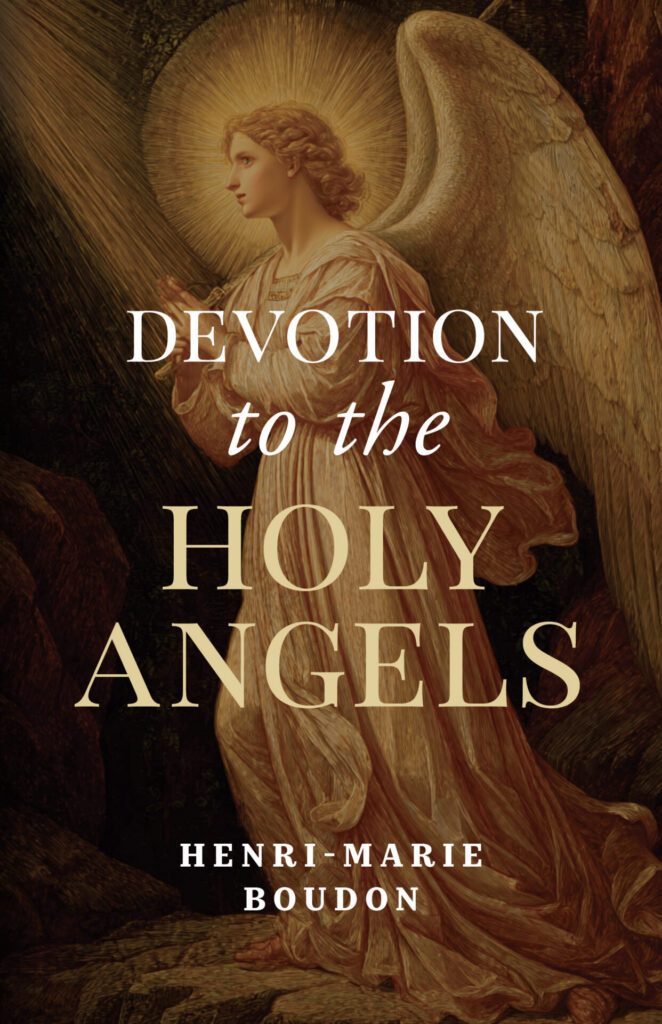
This article on the archangels is adapted from the book Devotion to the Holy Angels by Fr. Henri-Marie Boudon which is available from Sophia Institute Press.
Art for this post on a reflection from Devotion to the Holy Angels: cover used with permission; Photo used in accordance with Fair Use practices.