A Reflection from “At the Feet of the Church Fathers” by Sr. Mary Ann Fatula
Yes, by nature we fear death and recoil from the trials and sufferings that may lead up to or accompany it. Luke describes the anguish in Jesus’ human heart as He faced the horrors of His impending death with an agony so intense that “his sweat became like great drops of blood falling down on the ground” (Luke 22:44). Luke also recounts how Jesus’ anxiety before the terror of His death forced to His lips these precious words so comforting to us in our own sufferings: “Father, if you are willing, remove this cup from me; yet not My will but Yours be done” (Luke 22:42). With infinite love for His Father, the Lord made of His death His most tender, salvific act of love for us.
The Lord Jesus willingly, selflessly chose to die the most horrible tortures of our death. Why? So that we might be able to die “in” Him a death full of His own infinite peace (John 14:27), a death truly leading us to eternal life! This is why St. Paul assures us, “We do not want you to be uninformed, brothers and sisters, about those who have died, so that you may not grieve as others do who have no hope” (1 Thess. 4:13). For now our death in the Lord is a gentle “falling asleep” in Him (see 1 Cor. 15:17–18, NIV). With these beautiful words, St. Paul informs us that dying “in the Lord” (Rev. 14:13) is a surrendering of ourselves to the infinitely tender arms of Jesus. The Lord then unites us completely to Himself in His own infinite love for and surrender of Himself to His Father on the Cross.
But by freely submitting Himself to a tortured death for our sake, the Lord Jesus has become the risen Lord of life who has utterly “trampled” our death. And He has granted glorious, unending life to those in the tombs! This is why the Church Fathers write with such heartfelt emotion of the great power of the Lord’s death to conquer the power of death over us, the beloved members of His Mystical Body. For the sufferings the Lord Jesus endured before and during His sacrificial death on the Cross for us in this way have become the “medicine” that makes us whole. “Such was the tenderness of His love, even for those who put Him to death,” that the crucified Lord implored His Father to forgive His murderers (Luke 23:34). So great was the power of the Lord’s Crucifixion and death that even some of those who had crucified Him were later so transformed by His infinite love that they were ready to die for love of Him!
Because of His love for us, the Lord Jesus freely chose to die the most painful death for our sake, so that we could have His strength and His love and peace within us to face our own death in every possible circumstance. This is why we devoutly honor the crucifixes in our churches and homes and often make upon ourselves the Sign of the Cross, the sign of His death, for His death is the source of our life. United to the Lord, we now know that death has absolutely no power over us. Indeed, in the Lord, we can face death with hope and peace and even joy and anticipation, trusting in the Lord, crucified for us. For it is His grace that will uphold us in death and awaken us to the glorious, unending life of Heaven.
In a sermon inspired by the Holy Spirit and delivered with great beauty at the Easter Vigil, an early Church Father proclaims the miracle that the Lord accomplished through His sacred death on the Cross for us. The Lord freely permitted His sacred body to be cruelly slain by death. Ah, but in this way, He destroyed the power of death over us by the outpouring of His most precious Blood from the Cross. Indeed, after His death on the Cross for us, the Lord Jesus “filled the abode of the dead with His splendor and roused from sleep those lying there.” “Now, we have no fear of death. It is utterly powerless before the power of the Lord’s Resurrection.”
Nevertheless, the Lord knows how exceedingly painful it is for us by nature to confront death and how difficult it is for us to hold back tears as we face our own death or the death of those close to us. And so, in our sorrow and fear, we are consoled by the Lord Himself, who grieved with Martha and wept over the death of His beloved friend Lazarus. How poignant are the words of the evangelist John: “Jesus began to weep” (John 11:35). How infinitely sweet is the mercy of the Trinity, for “we do not have a High Priest who is unable to sympathize with our weaknesses” (Heb. 4:15).
St. Augustine tells us that after the death of his own beloved mother, St. Monica, he finally allowed himself to weep uncontrollably though he initially tried not to shed any tears. And Bishop St. Ambrose, who dearly loved both Monica and Augustine, tells us that such tears are to be welcomed as a consoling gift when we are grieving. For with the Trinity’s grace, we cling in faith to the saving truth that our death in the Lord is our coming home to glorious, unending life in the Trinity, in company with our Blessed Mother, all the angels, saints, and all our loved ones in Heaven. We are consoled especially by the truth we know through faith: that our loved ones who have died continue even now to be with us. They are loving and helping us more dearly than ever, and surely will be present with us, helping us especially at the time of our death. They inspire and help us not to fear death but rather to look forward to the Lord’s calling us home to be with them forever in Heaven’s joy!
After the sudden and tragic death of his own precious younger brother, Satyrus, St. Ambrose found that even as he mourned, he became increasingly freed of all fear of death. His closeness to his brother through faith and grace drew him to trust that, in the Communion of Saints, Satyrus was even more deeply with him and would one day gently accompany him home to Heaven.
When our own loved ones die, or as we ourselves face our own death, let us, too, pray for the grace of deep trust that at the time of death, our deceased loved ones have been and will be there, tenderly helping us and our dear ones and bringing us home.
+
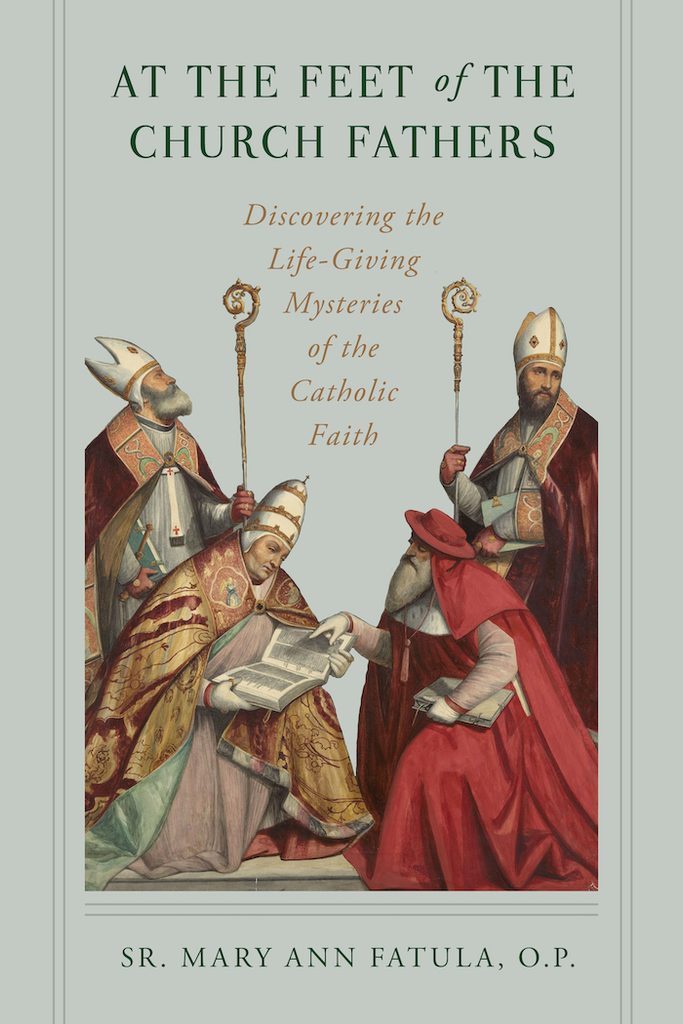
This article on death is adapted from the book, At the Feet of the Church Fathers, which is available from Sophia Institute Press.
Art for this post on a reflection from At the Feet of the Church Fathers: cover used with permission; Photo used in accordance with Fair Use practices.