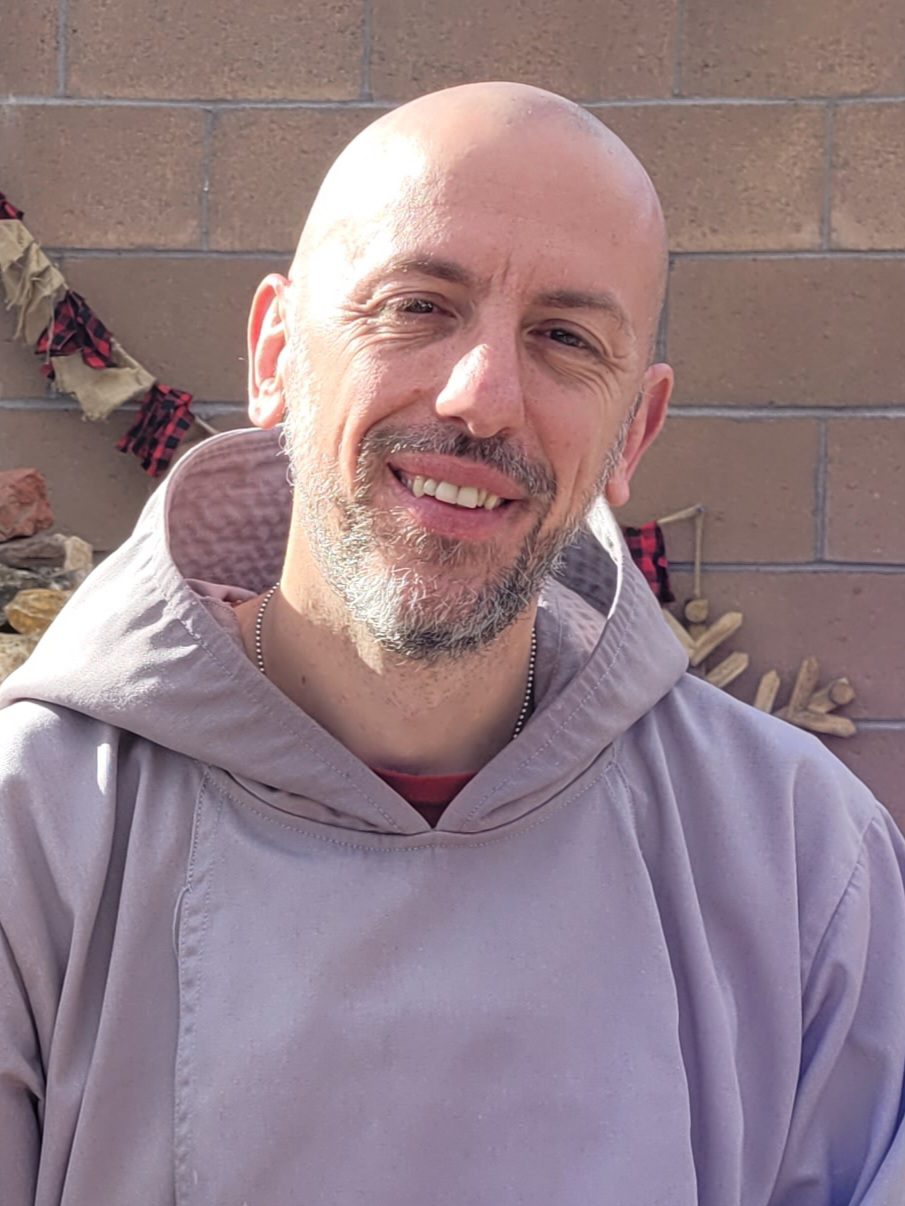
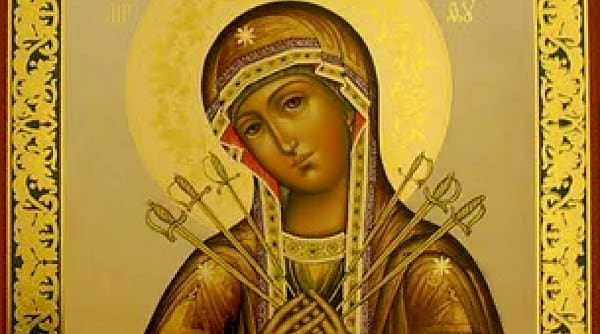
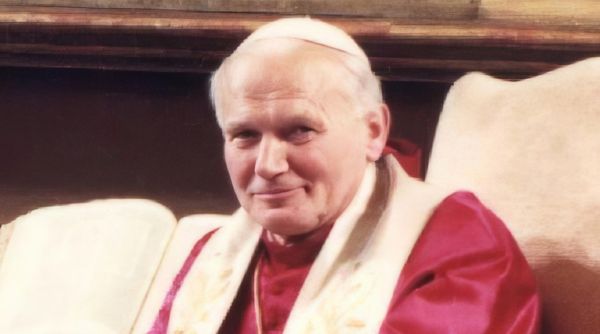
Inside my room in the friary, which we Franciscans often refer to as our cell, I have a rather large crucifix hanging in the center of the wall opposite the window. Next to the crucifix is an icon of the Blessed Virgin Mary. Surrounding Jesus and Mary are icons of some of my dearest friends and greatest teachers. Above the crucifix is an icon of St. John of the Cross, then in clockwise direction, there is an icon of St. Francis of Assisi, St. Anthony of the Desert, St. Bernadette, St. Maximillian Kolbe, St. Catherine of Alexandria, and last but certainly not least, St. John the Baptist.
Every day I spend a few hours in my cell praying, reading, and writing. It is here, gathered with my closest friends and teachers that I “seek the things that are above, where Christ is, seated at the right hand of God” (Colossians 3:1). I would be lying if I said that all or any of these three things are easy. I am, after all, only human and therefore prone to self-absorption, laziness, and confusion. Yet amid my own human difficulties, a simple glance towards one of my friends in the icons not only inspires me and encourages me, but also reminds me that holiness is possible, even for someone like me!
As important as inspiration, encouragement and reminders are, this is not all that my friends do for me. They also teach me, more than any book or class in theology that I have taken has, about God. They teach and show me through their own lives how to love God, how to pray, and perhaps most importantly, how to forget myself so that I can live totally for God alone.
St. John of the Cross has taught me about the complexities and nuances of the spiritual life, while St. Francis of Assisi has revealed to me the riches of poverty. St. Anthony of the Desert has shown me the beauty of solitude, while I have witnessed in the life of St. Bernadette the value of redemptive suffering. St. Maximilian Kolbe has revealed to me the necessity of Mary, the mother of God in my life, while St. Catherine of Alexandria has taught me to be bold and courageous in proclaiming Christ regardless of the cost. Finally, St. John the Baptist has taught me about the prophetic nature of the ascetical life and of the dire necessity that Jesus “must increase, but I must decrease” (John 3:30).
Who then are these mysterious friends that we call saints? The Catechism of the Catholic Church defines a saint as “the ‘holy one’ who leads a life in union with God through the grace of Christ and receives the reward of eternal life” (CCC 898). The saints then are those men and women who, despite their sinfulness, brokenness and fears, choose to put all their faith and hope in God and to live only for him. Some of the saints lived very long lives, while others died young. Some of the saints were highly intelligent, while others couldn’t even read. Some of the saints were quite busy, proclaiming Christ and serving him in various apostolic endeavors, while others lived in solitude, never traveled and barely spoke to anyone.
Despite these external differences, the saints all have one thing in common: A burning love for Jesus Christ and the desire to live only for him. If we truly desire to live as God intends, and hopefully we all do, how can we not love and admire these men and women who have so courageously and generously loved God without limits? Despite what some may believe, honoring the saints and developing a friendship with them is not a hindrance or an obstacle to our relationship with Christ. For it is these dear friends of ours who, through their own life and example, reveal to us more deeply the mystery and beauty of Jesus Christ and show us how to follow him despite our own human limitations. Thus, the saints reveal themselves to us as trustworthy guides and teachers, and those whose friendship we would be wise to cultivate.
***
This post is taken from the foreword of Cloud of Witnesses: 25 Stories of Saintly Inspiration and Intercession, available here.
Join Fr. Jeremiah Shryock and Claire Dwyer for a special Spiritualdirection.com pre-Advent retreat on November 21, “Pondering and Preserving the Word: The Maternal Memory of Mary.” More details and registration info here.