Human love, with all its frailty and limitedness, has a great and sacred purpose.
It is a mirror for the glory of God.
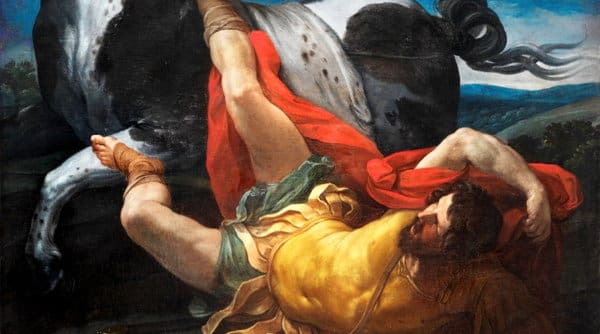
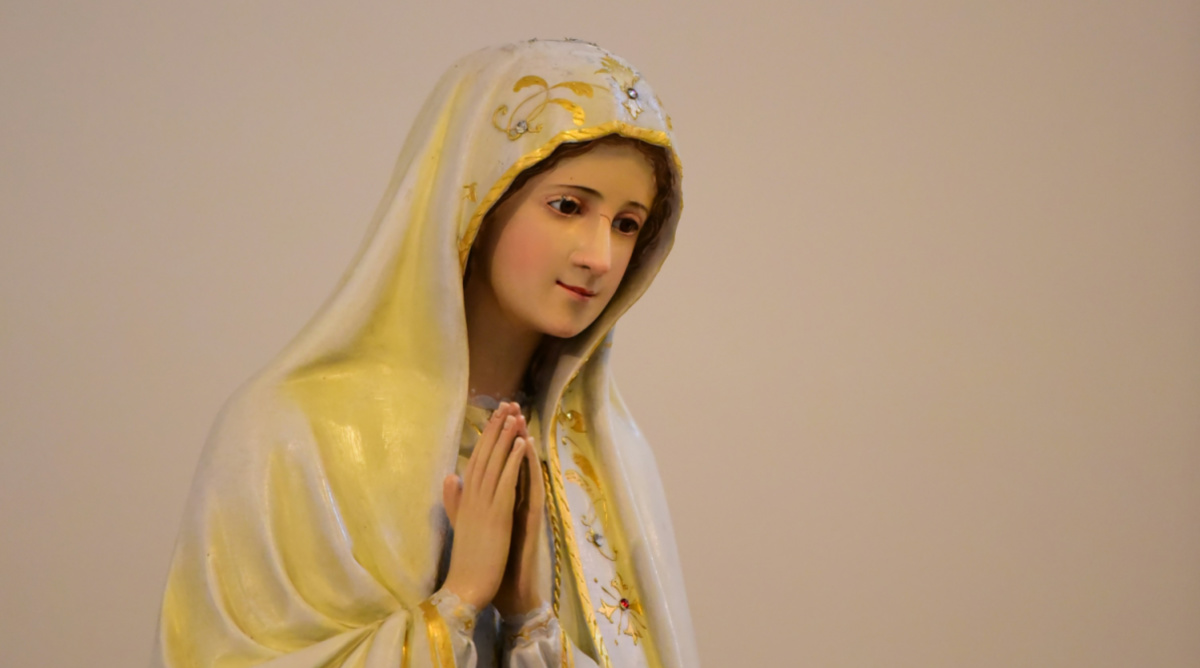
That glory would remain hidden and unseen but for the love of Adam and Eve, even in their fall and its aftermath. It is precisely in the failures of human love that Divine Love reflects all the more – implicating Himself in the misery behind our blame games and mutual shame. So it is that human love is sanctified and perfected when Mary and Joseph welcome the gift of God’s love into their home – the the form of a helpless infant, the invincible power of Divine Love reverberates through human history and through the personal story of every love.
He has never taken our loves lightly because from before the foundation of the world, He pondered our hearts, knew our tragedies, and delighted at the possibility of our faith and hope. Thus, He has chosen to accompany us, even as Adam and Eve were sent out of the garden, and always He is ready to make our broken efforts of love filled with life and truth. Always, He is ready to heal and restore what we have destroyed. It is in the healing and reconciliation, the humility and courage, the forgiveness and being forgiven, the mutual prayers and decision for faithfulness that our love makes space for Him to be magnified in the world anew.
The reason that this is true pertains to the deepest truth of creation. All of creation is the handiwork of God. Summoned into existence out of nothing for no other reason than the Lord willed it’s goodness into being, each creature is an unrepeatable instance of the sheer wonder of His love. This divine love is always making space for the other to exist, always respecting each creature’s sphere of integrity. He does not force or coerce, but evokes and invites to a greater fullness that He yearns to share.
Here there is a great paradox: our likeness to God is in our otherness, our distinctness as creatures. It is true that the greater the likeness, the greater the union. It is also true that the closer we allow ourselves to be drawn to Him, the more fully our otherness is manifest — and this otherness that He knew before there was either time or space delights His heart. He who is totally Other delights when we become the otherness that He predestined us to become – this beautiful, wondrous otherness reflects and magnifies His Otherness, the incomprehensible splendor in ways that no other creature in the heavens or the earth can do.
So it is with our love for one another. Our differences, although the source of agitation and requiring so much patient perseverance with one another, are precisely the most amazing part of our vocation as human beings. We are meant to become a tender solidarity of hearts, islands of humanity, living shelters in the difficult storms of life – who are crushed with sorrow at the thought of not being of one heart and mind with one another no matter the differences or trials that must be faced. We are given to one another in all our distinctness so that we might learn to love – and in this love we discover the truth about ourselves, that secret that only God knows and that others at times glimpse for a moment. When we learn to love, to make space for one another, to receive the gift of the other for who he is and to bless him, when especially we suffer to love, bearing the misery of another to relieve his suffering and to affirm his dignity – the mystery of God Himself is reflected and magnified anew.
This post was originally published on Beginning to Pray and is reprinted here with permission.
Image courtesy of Pixabay.